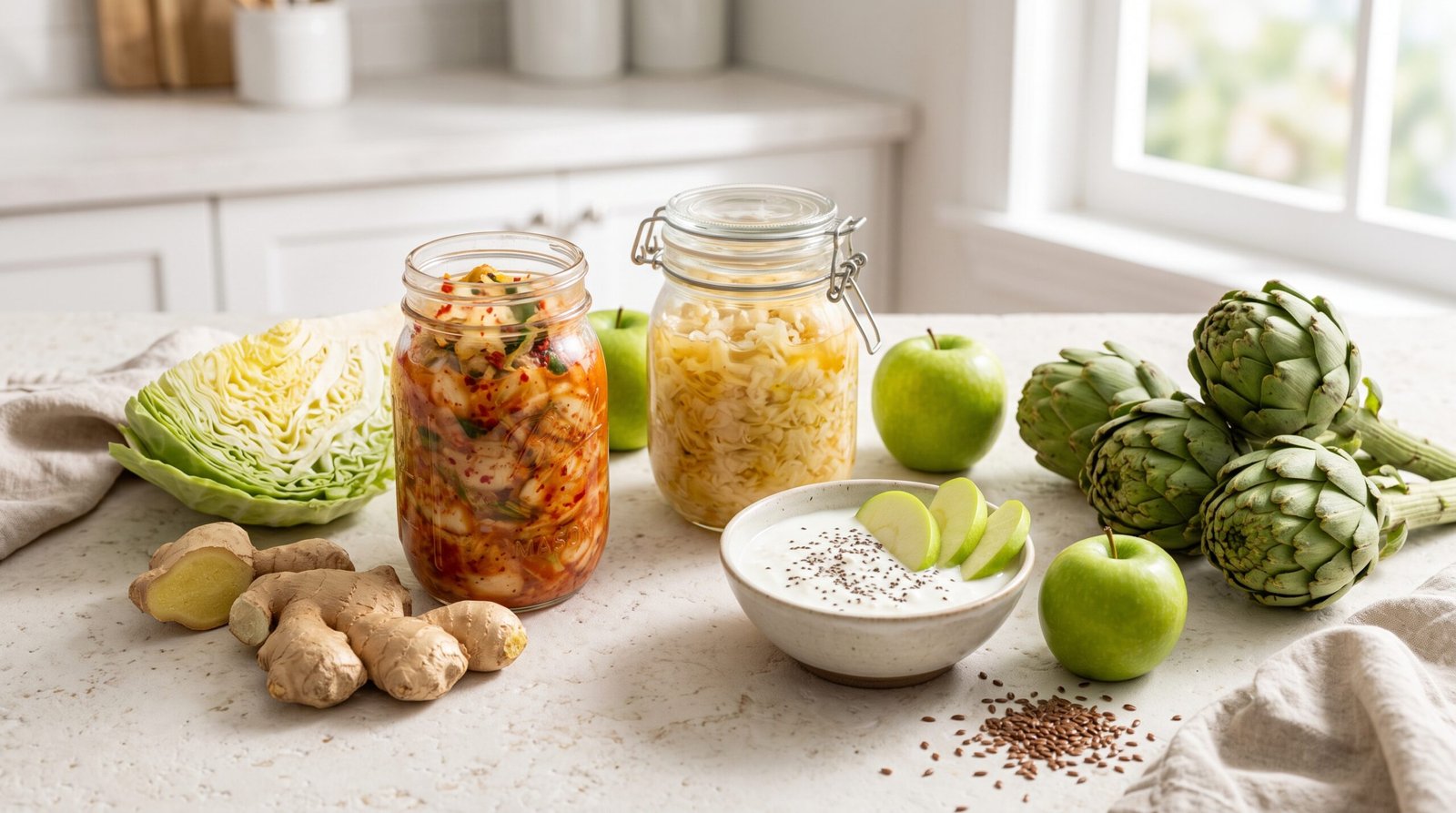
Maintaining a balanced gastrointestinal tract is foundational to physical energy, nutrient absorption, and steady immune defense. Incorporating proven gut health essentials into your daily meal planning helps nurture beneficial gut microbiota, reduces post-meal bloating, and supports smooth gastrointestinal transit.
Rather than relying on expensive synthetic supplements, prioritizing natural prebiotic fibers, probiotic ferments, and anti-inflammatory whole foods provides your digestive system with the necessary building blocks for sustained gut lining integrity and metabolic balance.
Key Takeaways
- Feed the Microbiome with Prebiotics: Soluble prebiotic fibers found in oats, onions, garlic, and flaxseeds fuel beneficial bacteria like Bifidobacteria.
- Introduce Live Probiotic Cultures: Naturally fermented foods—including kefir, kimchi, sauerkraut, and tempeh—replenish live microbial strains directly.
- Support the Epithelial Barrier: Dietary polyphenols from berries and green tea protect the intestinal lining against oxidative stress and mild permeability.
- Stay Consistent with Hydration: Adequate water intake alongside soluble fiber ensures healthy stool formation and prevents sluggish motility.
1. Probiotic-Rich Fermented Foods: Restoring Microbial Diversity
Fermented foods undergo natural lacto-fermentation, a process in which natural bacteria feed on sugars and starches to create lactic acid, preserving the food and generating live active cultures.
- Kefir and Traditional Yogurt: These fermented dairy options deliver diverse strains of Lactobacillus and Bifidobacterium, aiding lactose breakdown and soothing gastrointestinal discomfort.
- Unpasteurized Sauerkraut and Kimchi: Beyond beneficial lactic acid bacteria, fermented cabbage provides high amounts of dietary fiber, vitamin C, and digestive enzymes.
- Tempeh and Miso: Fermented soy products break down natural phytates, enhancing the bioavailability of plant proteins and essential minerals.
2. Prebiotic Powerhouses: The Fuel for Beneficial Bacteria
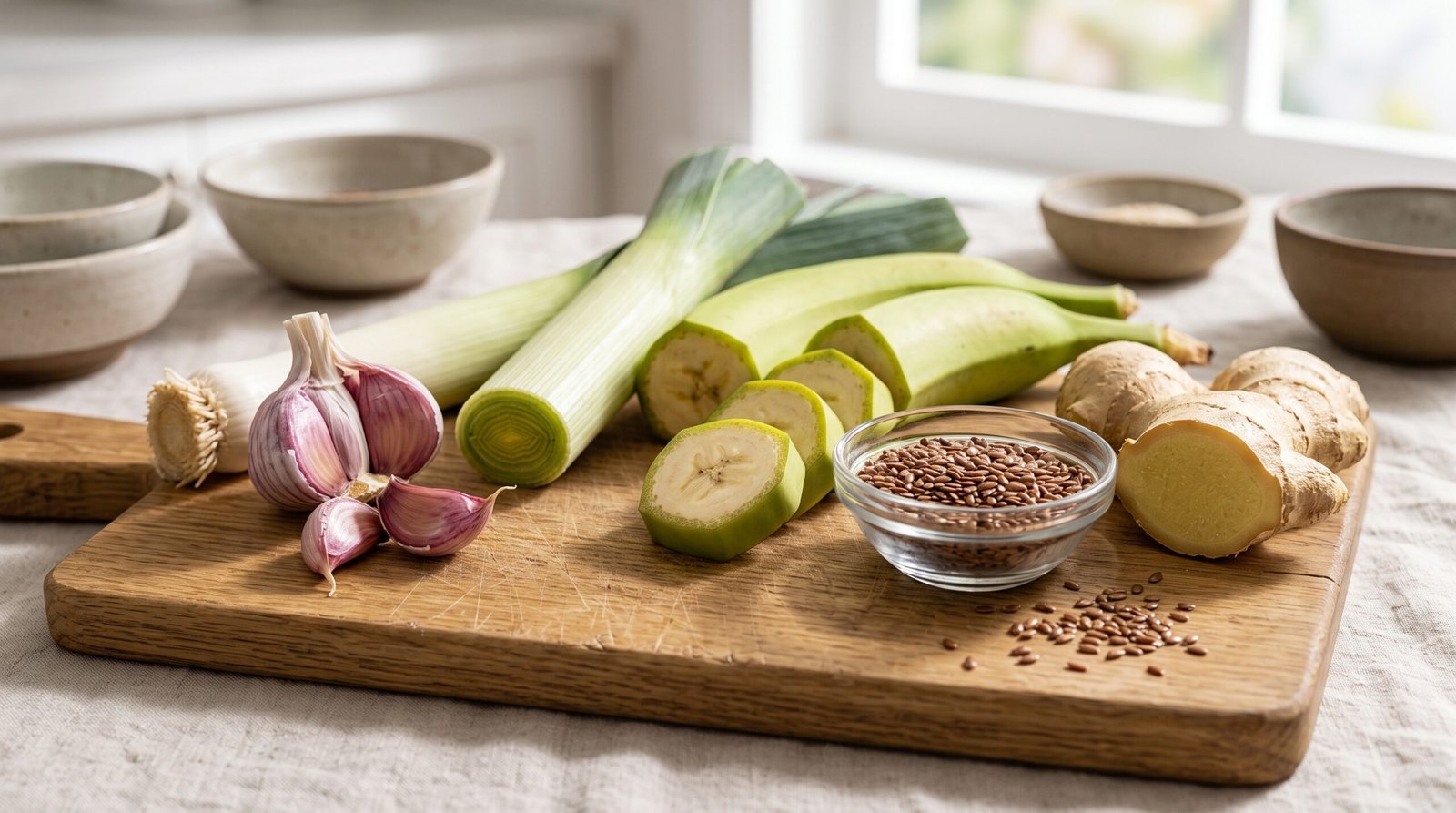
Probiotics cannot thrive without adequate nutrition. Prebiotics are non-digestible plant fibers that travel intact through the upper digestive tract to ferment in the colon, producing beneficial short-chain fatty acids (SCFAs) like butyrate.
| Food Category | Key Prebiotic Sources | Primary Gut Health Benefit |
|---|---|---|
| Resistant Starches | Cooked & cooled potatoes, green bananas | Feeds colonocytes and enhances butyrate production |
| Inulin-Rich Alliums | Garlic, leeks, onions, asparagus | Stimulates selective growth of healthy Bifidobacteria |
| Whole Grains | Rolled oats, barley, quinoa | Provides beta-glucan fiber to regulate bowel regularity |
| Mucilaginous Seeds | Chia seeds, ground flaxseeds | Forms a protective gel-like matrix soothing the digestive wall |
3. Soothing Spices and Polyphenol-Rich Foods
In addition to live microbes and plant fibers, certain natural compounds help calm digestive inflammation and stimulate digestive enzymes.
Digestive Spices and Herbs
- Fresh Ginger: Contains gingerols, which accelerate gastric emptying and reduce nausea or upper abdominal heaviness.
- Peppermint & Fennel: Relax smooth muscle tissues along the intestinal wall, helping relieve gas build-up and cramping.
Polyphenol Antioxidants
Dark berries, pomegranate seeds, extra-virgin olive oil, and high-percentage dark chocolate deliver potent polyphenols. Because polyphenols are poorly absorbed in the small intestine, they reach the colon where bacteria transform them into bioactive metabolites that strengthen mucosal immunity.

4. Practical Dietary Framework to Support Digestion
- Aim for 30 Plant Varieties Weekly: Maximize microbial diversity by rotating different vegetables, fruits, legumes, nuts, and seeds throughout the week.
- Chew Thoroughly: Mechanical digestion in the mouth initiates salivary amylase production, reducing the enzymatic workload downstream.
- Pace Fiber Increases Gradually: Introduce high-fiber legumes and ferments incrementally to allow your gut microbiota time to adapt without initial bloating.
- Hydrate Between Meals: Drink water consistently throughout the day to support mucosal hydration without diluting stomach acid during meal times.
Frequently Asked Questions
How quickly can simple food changes improve gut health?
Dietary modifications begin shifting the composition of your gut microbiome within 24 to 72 hours, though noticeable improvements in bloating, transit regularity, and overall digestive comfort generally take 2 to 4 weeks of consistent nutrition.
Is it better to take probiotic supplements or eat fermented foods?
Whole fermented foods provide a natural matrix of live bacteria alongside organic acids, dietary enzymes, and prebiotic fibers, offering broader digestive synergy than single-strain isolated supplements.
Can poor gut health cause brain fog and low energy?
Yes. Through the bidirectional gut-brain axis and systemic vagus nerve communication, an unbalanced gut microbiome can increase systemic inflammation and disrupt neurotransmitter synthesis, leading to sluggishness and cognitive fatigue.
Integrating these gut health essentials into your routine empowers your digestive system naturally, fostering long-term resilience and vitality. Focus on diverse whole foods, steady hydration, and probiotic-rich staples to nurture a balanced microbiome and optimize everyday digestion.
1 thought on “Gut health essentials That Naturally Boost Digestion”