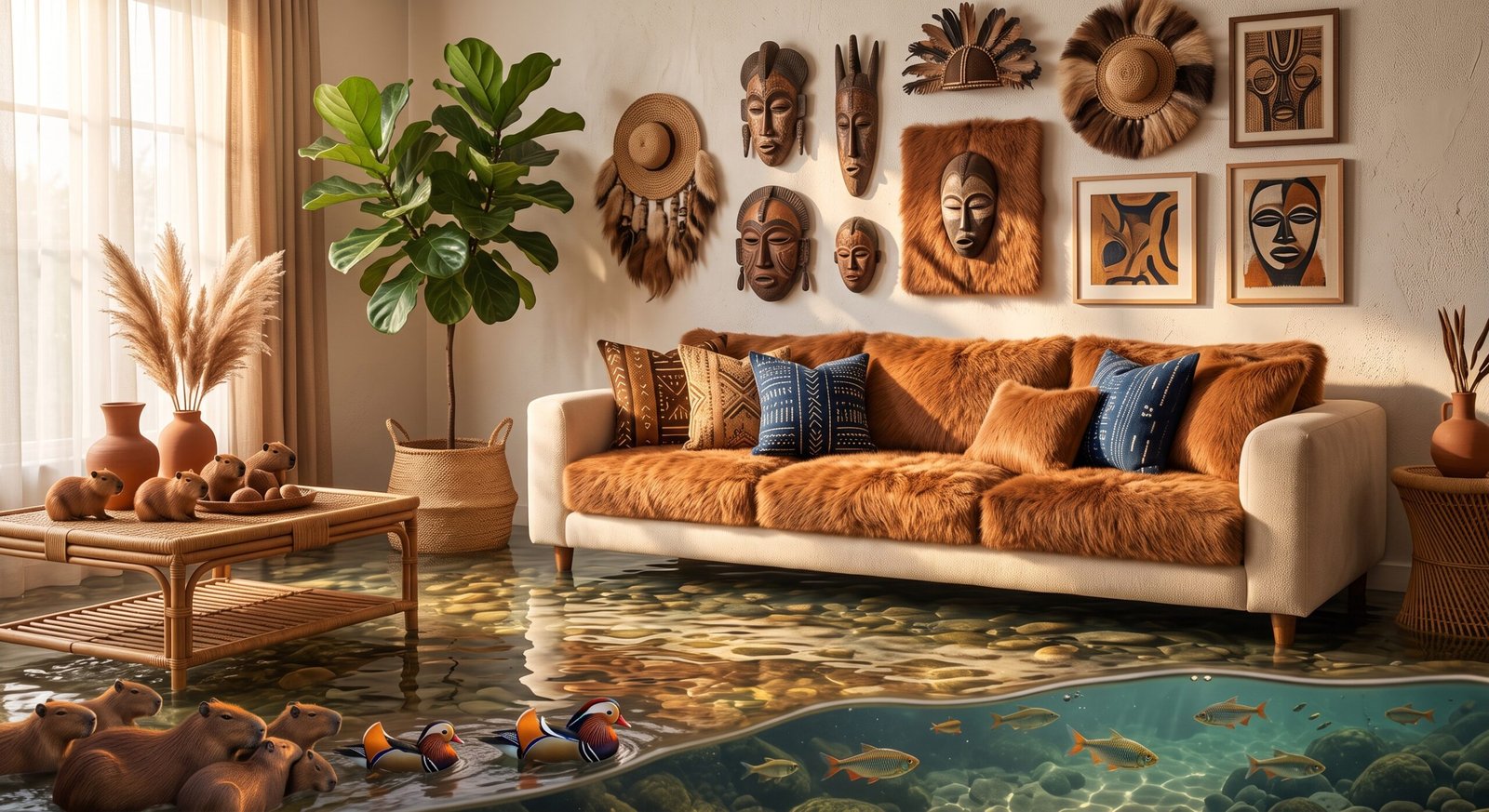
Modern home design is undergoing a profound cultural evolution away from sterile, cookie-cutter minimalism toward warmth, narrative depth, and visible craftsmanship. At the forefront of this movement is Afrobohemian decor—a soulful aesthetic that harmonizes the rich heritage, symbolic textiles, and artisanal woodwork of African traditions with the effortless layering and plant-forward freedom of bohemian styling.
Rather than treating spaces as static showrooms, Afrobohemian interior design builds layered, lived-in sanctuaries. By prioritizing organic materials, rich earth tones, authentic cultural textiles, and intentional negative space, this aesthetic transforms everyday living spaces into expressive, textured retreats.
Key Takeaways
- Grounded in Earthy Palettes: The aesthetic builds from a base of clay, terracotta, sand, warm mocha, and softened black, elevated with deliberate accents of indigo, ochre, and forest green.
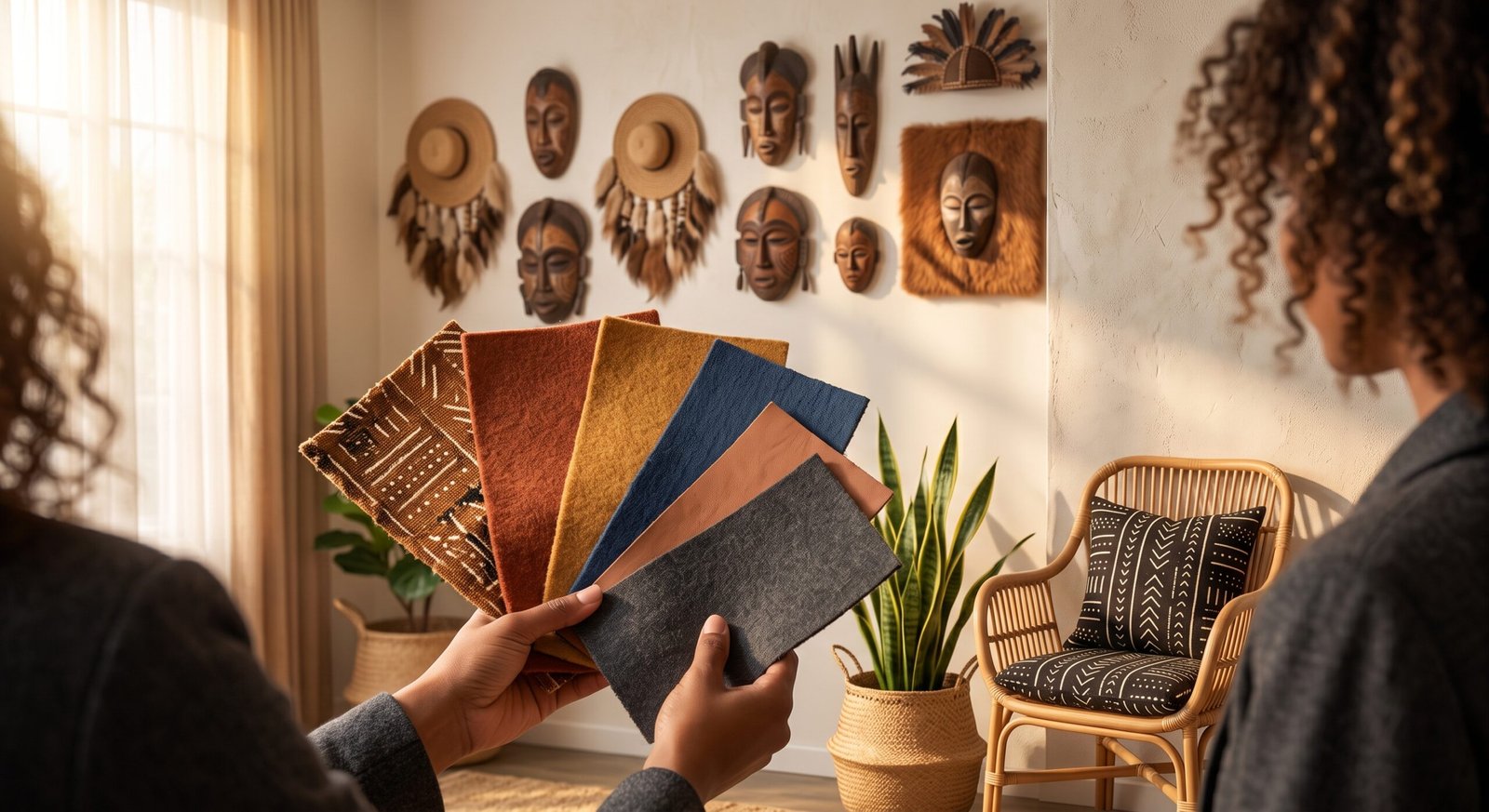
- Celebrates Named Heritage Textiles: Authentic textiles—such as Malian mudcloth (bògòlanfini), Nigerian adire, and Congolese Kuba cloth—provide tactile storytelling and visual geometry.
- Emphasizes Natural Materials: Hand-carved wood, woven seagrass, clay pottery, and cane create rich physical textures that ground contemporary architecture.
- Pairs Greenery with Sculptural Form: Architectural indoor plants like monstera, birds of paradise, and rubber trees soften sharp corners and connect interiors to nature.
1. Defining the Aesthetic: Heritage Craft Meets Bohemian Ease
Afrobohemian decor sits at the intersection of two dynamic design philosophies. The African influence contributes geometric symbolism, ancestral craft traditions, basketry, and sculpted forms. The bohemian sensibility introduces relaxation through low-profile seating, eclectic lighting, and layered floor coverings.
- Authenticity Over Trends: The focus is on purposeful curation, featuring handcrafted pieces with distinct origins rather than mass-produced replicas.
- Architectural Harmony: Subtle textured plaster walls, arched doorways, built-in wall niches, and terracotta flooring provide a warm, tactile backdrop that complements artisan decor.
- Tactile Contrast: Balancing rough-hewn timbers and matte ceramic pottery against soft linen drapery and woven wool rugs creates effortless visual balance.
2. The Afrobohemian Color Palette and Core Materials
Creating a cohesive Afrobohemian space requires establishing a disciplined foundation before introducing vibrant cultural accents.
| Design Element | Primary Materials & Tones | Strategic Purpose in the Room |
| Foundation Base | Warm cream, clay, mocha, sand, raw linen | Softens natural light and provides visual breathing room |
| Grounding Accents | Charcoal, deep espresso wood, softened black | Adds structural weight and sharpens room contours |
| Heritage Accent Colors | Indigo blue, mustard ochre, rust terracotta, olive | Injects vibrant cultural warmth and focal contrast |
| Hard Textures | Carved suar wood, stone trays, hand-thrown pottery | Prevents the space from feeling overly soft or unstructured |
| Soft Textures | Jute, raffia, sisal, handwoven Kuba cloth, boucle | Enhances tactile comfort across seating and floor zones |
3. Styling Room by Room: Layering Textiles and Biophilic Elements
Bringing Afrobohemian decor into your living spaces is an exercise in intentional layering without cluttering the floor plan.
The Living Room: Focal Gallery and Anchor Rugs
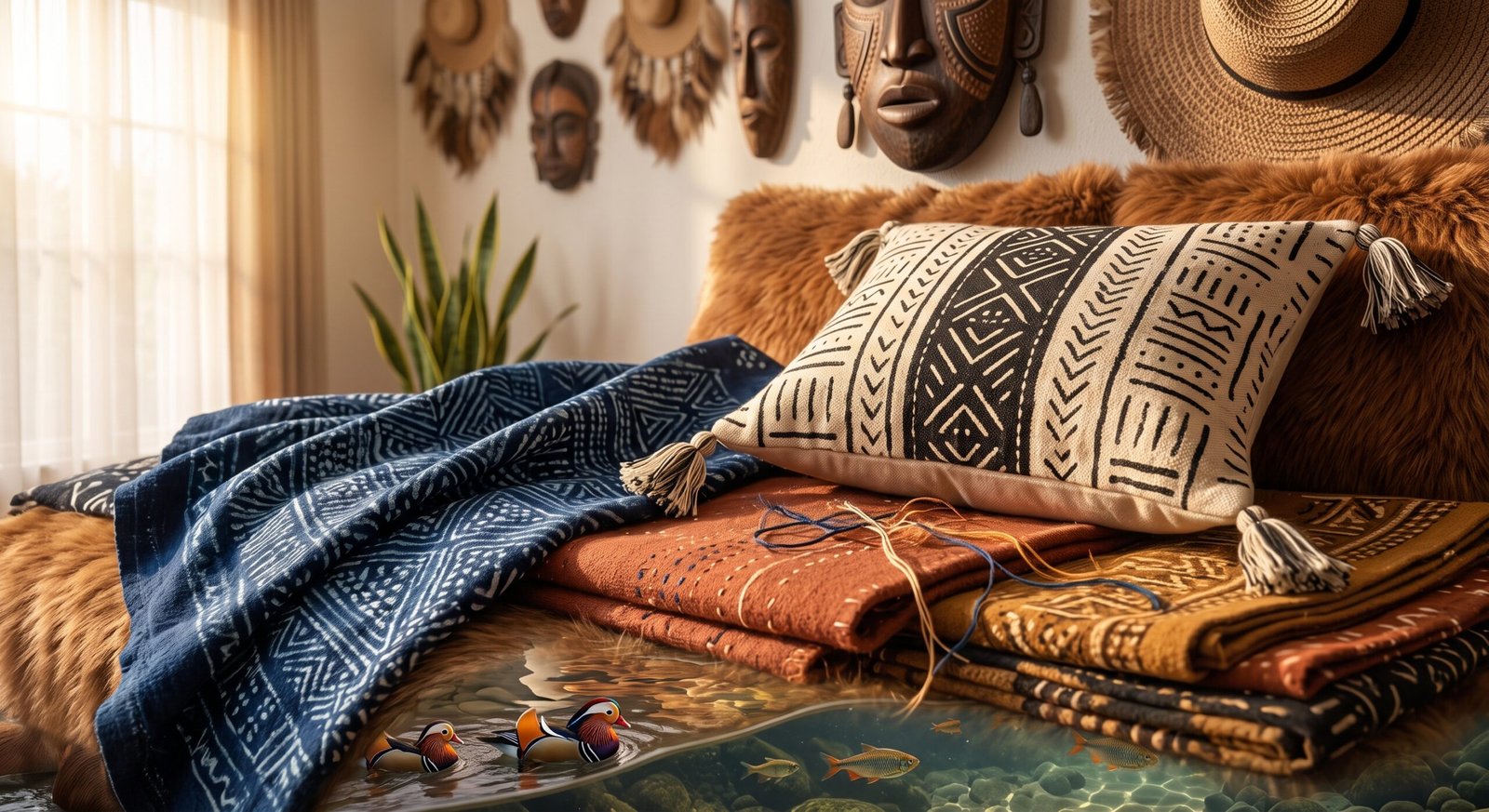
Anchor the conversation area with a neutral jute rug topped by a smaller, patterned tribal flat-weave. Select a comfortable sofa in natural oatmeal linen, then introduce personality through a balanced trio of cushions: one graphic black-and-white mudcloth pillow, one textured adire tie-dye cushion, and a solid rust-toned velvet pillow.
Biophilic Plant Styling
Incorporate architectural indoor plants styled in woven basket planters or textured unglazed ceramic pots. Fiddle-leaf figs, snake plants, and trailing pothos introduce organic movement while bridging the gap between indoor textiles and the natural world.
4. Practical Checklist to Transition Your Home to Afrobohemian Style
- Establish a Neutral Earth Base: Paint walls in warm plaster whites, beige, or soft clay tones to set a calm foundation.
- Audit and Introduce Named Textiles: Select one or two dominant textile traditions per room (such as Kuba cloth or woven kente patterns) to keep the space curated.
- Incorporate Hand-Carved Wood: Add a wooden Bamileke-style stool or a reclaimed wood coffee table to inject organic warmth.
- Curate a Woven Wall Display: Arrange three to five flat woven Tonga or Binga baskets in an asymmetrical cluster above a credenza or headboard.
- Preserve Negative Space: Allow empty wall areas and unadorned surfaces so that each handcrafted art object has space to stand out.
Frequently Asked Questions
What is the core difference between traditional Bohemian style and Afrobohemian decor?
While traditional bohemian style emphasizes general eclecticism, vintage mixing, and colorful jewel tones, Afrobohemian decor intentionally grounds the space in African textile heritage, ancestral woodworking, earth-toned palettes, and curated artisanal storytelling.
How can I incorporate Afrobohemian decor into a small apartment without overwhelming the space?
Focus on minimalist layering. Use an earth-toned base palette, hang a single statement woven basket or framed textile on the main wall, and style one tall architectural plant in an unglazed clay planter.
Where can I find authentic materials for Afrobohemian interior styling?
Look for fair-trade artisan cooperatives, ethical African importers, independent craft markets, and vintage collectors who provide transparency regarding the origin, artisan community, and historical technique behind each piece.
Embracing Afrobohemian decor allows you to design living spaces that feel warm, culturally rich, and deeply personal. By pairing authentic craftsmanship with organic textures and thoughtful restraint, you create a soulful home environment that remains timeless and effortlessly inviting.
1 thought on “Afrobohemian Decor Hacks for Modern Home Interiors”