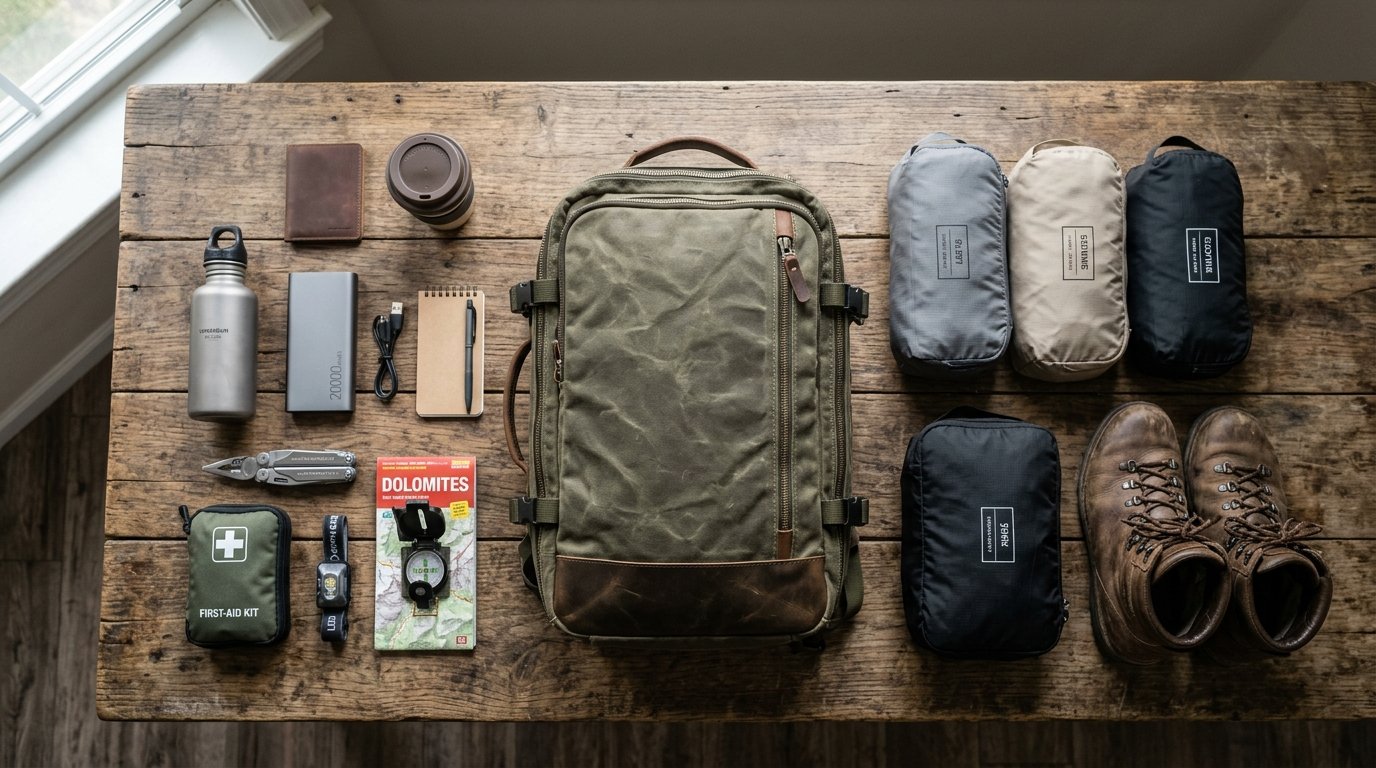
Overpacking turns transit into an exhausting chore, triggers unnecessary checked bag fees, and leaves you carrying items you never touch. Mastering your packing & gear strategy is the single most effective way to improve your travel experience, whether you are embarking on a weekend city escape or a multi-week international expedition.
Traveling efficiently is not about deprivation; it is about choosing purposeful, durable, and versatile items that function reliably across varied climates and settings. By optimizing your core packing & gear checklist and implementing modular organizational systems, you can easily travel indefinitely with just a single carry-on bag.
Key Takeaways
- Fabric Technology Over Volume: Prioritizing technical materials like merino wool and ripstop nylon reduces load weight, resists odors, and allows for rapid sink washing.
- Modular Organization: Using compression packing cubes and dedicated tech pouches accelerates security clearance and eliminates chaotic repacking.
- The “One-Bag” Mindset: Keeping total weight under 7–10 kg bypasses airline baggage fees and provides complete freedom of movement.
- Dual-Purpose Utility: Every piece of gear should serve at least two distinct functions (e.g., a scarf that doubles as a blanket or trail shoes suitable for walking tours).
The Core Philosophy of Efficient Packing & Gear
Every successful packing system relies on intentional curation. The key to refining your travel gear comes down to three foundational rules:
- Volume Management: Constrain your total space to a 35L–45L carry-on pack to avoid the temptation to bring “just-in-case” items.
- Fabric Selection: Replace bulky cotton apparel with moisture-wicking synthetics or odor-resistant merino wool that dry overnight.
- Weight Distribution: Place heavier items close to your spine in backpacks, or low near the wheels in roller luggage, to maintain balance and reduce strain.
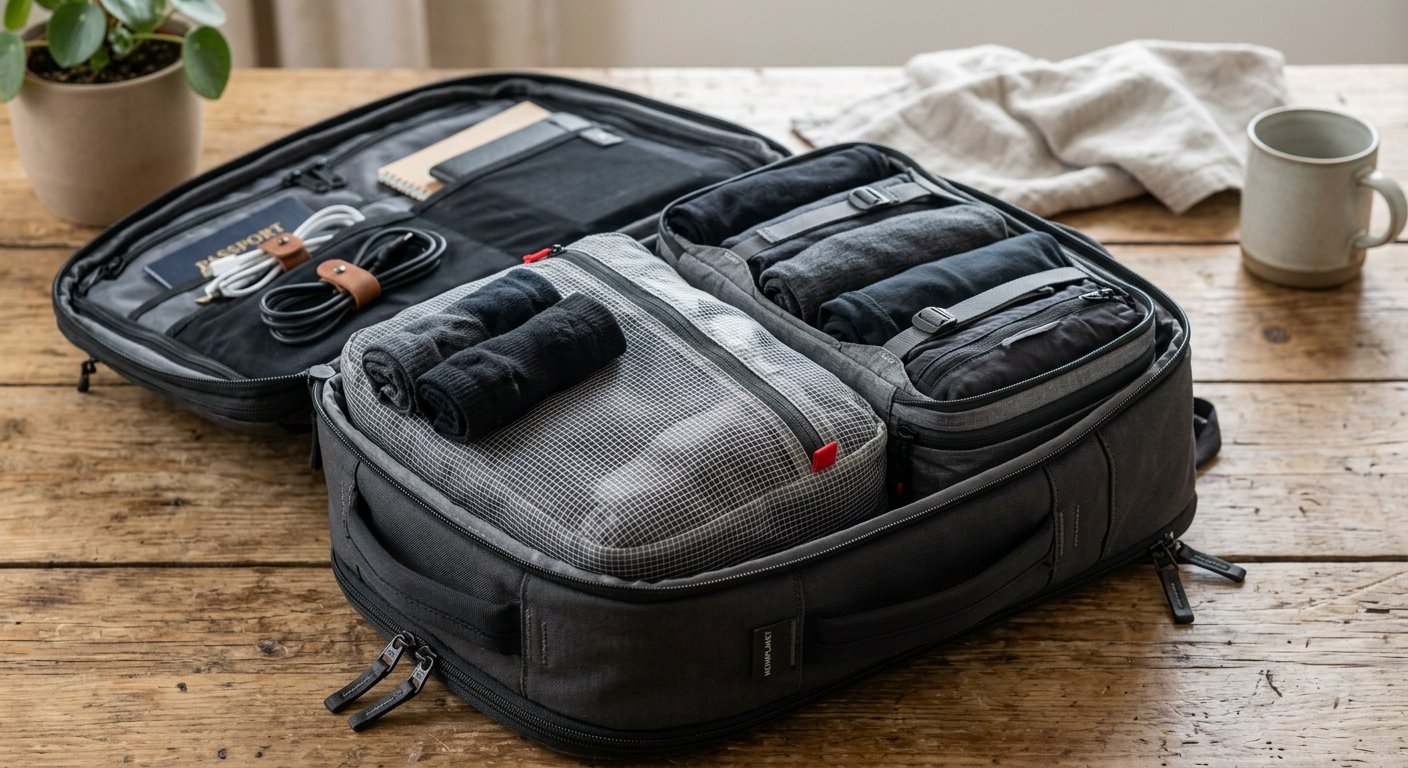
The Essential Packing & Gear Checklist by Category
Organizing your travel equipment into dedicated compartments prevents clutter and ensures quick access during transit.
| Category | Must-Have Items | Key Feature to Look For |
| Luggage & Packs | 40L Carry-on backpack or hardshell spinner | YKK weather-resistant zippers, durable Cordura or polycarbonate |
| Clothing System | 3–4 tops, 2 bottoms, 1 versatile layer, 4 underwear | Odor-resistant merino wool, quick-dry synthetic blends |
| Toiletries | Solid shampoo bar, mineral sunscreen, travel toothbrush | TSA-compliant 3-1-1 liquids pouch, leakproof silicone bottles |
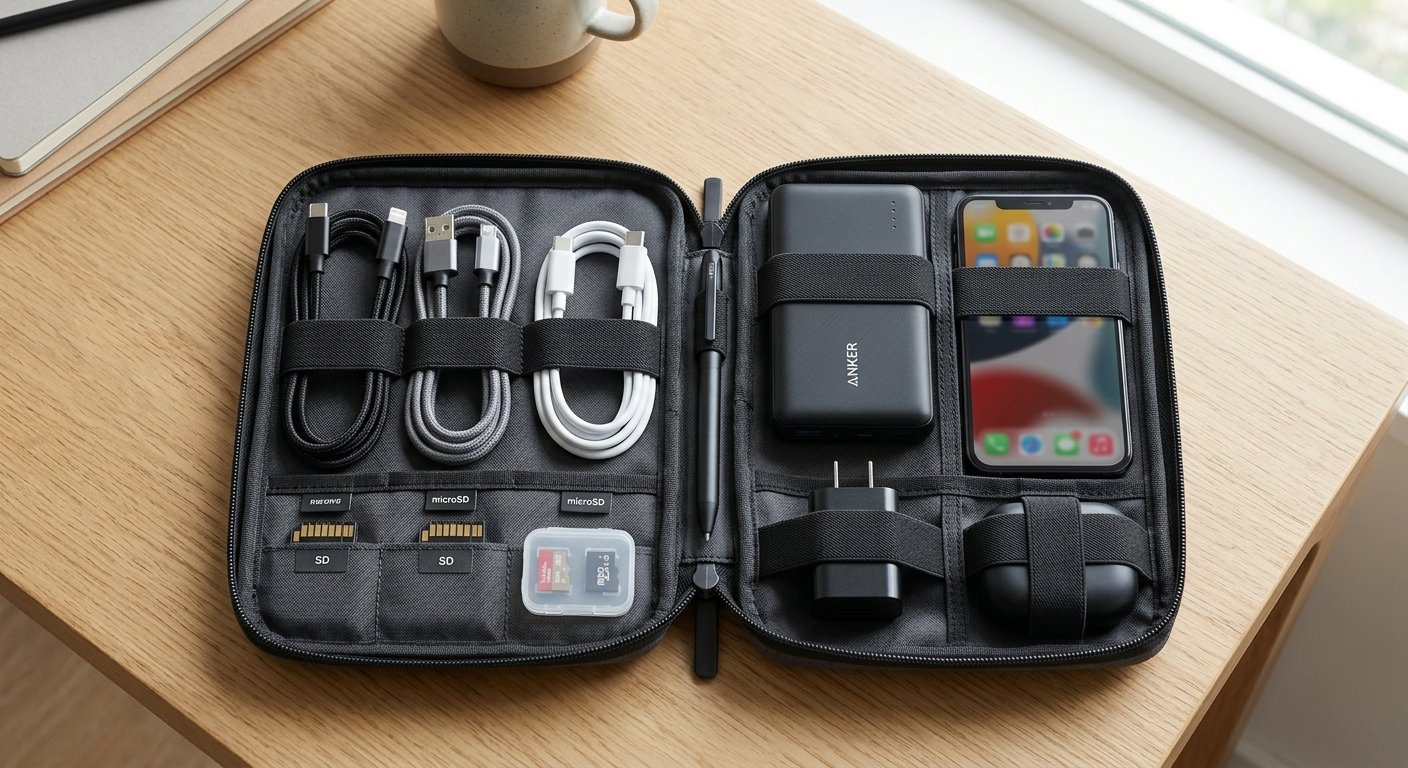
| Electronics & Tech | 65W GaN multi-port wall charger, 10,000mAh power bank | USB-C universal charging, compact universal plug adapter |
| Trail & Daily Extras | Packable daypack, filtered water bottle, compact umbrella | Collapsible, ultralight, tear-resistant ripstop nylon |

How to Pack: Folding vs. Rolling vs. Compression Cubes
How you store your clothing matters just as much as what you bring. Combining the right folding methods with compression tools preserves garment shape while maximizing internal luggage volume.
1. The Military Ranger Roll
For T-shirts, athletic shorts, and base layers, the ranger roll tightly wraps the fabric into a secure cylinder held by its own hem. This prevents unraveling inside your bag and minimizes friction creases.
2. Compression Packing Cubes
Standard packing cubes keep items grouped, but compression cubes feature a secondary perimeter zipper that expels trapped air. This reduces fabric volume by up to 30%, making them indispensable for cold-weather layers and mid-weight jackets.
Avoiding Common Travel Gear Mistakes
- Bringing Unbroken-In Footwear: Never pack new shoes directly for a trip. Stick to one comfortable walking/running shoe worn in transit, paired with one packable, lightweight secondary option.
Streamlining Your Travel Workflow
Elevating your packing & gear selection changes how you travel. Eliminating heavy bags and redundant accessories removes the physical friction of navigating train stations, cobblestone alleys, and busy airport terminals. By investing in resilient, multi-functional gear and adopting a minimalist packing routine, you maintain total mobility and focus entirely on the destination ahead.
Frequently Asked Questions About Packing & Gear
What is the 5-4-3-2-1 packing rule?
The 5-4-3-2-1 rule is a minimalist packing framework designed for week-long trips: 5 pairs of socks and underwear, 4 tops, 3 bottoms, 2 pairs of shoes, and 1 outerwear layer or hat.
Are compression packing cubes worth it?
Yes. Compression packing cubes use an external perimeter zipper to compress soft garments, saving up to 30% of luggage space while keeping your pack systematically organized and wrinkle-free.
What size bag qualifies as a universal carry-on?
A bag measuring roughly 22 x 14 x 9 inches (56 x 36 x 23 cm) with a capacity between 35 and 40 liters fits within most domestic and international airline overhead bin limits.
1 thought on “Packing & Gear: Easy Guide to Travel Smarter Today”