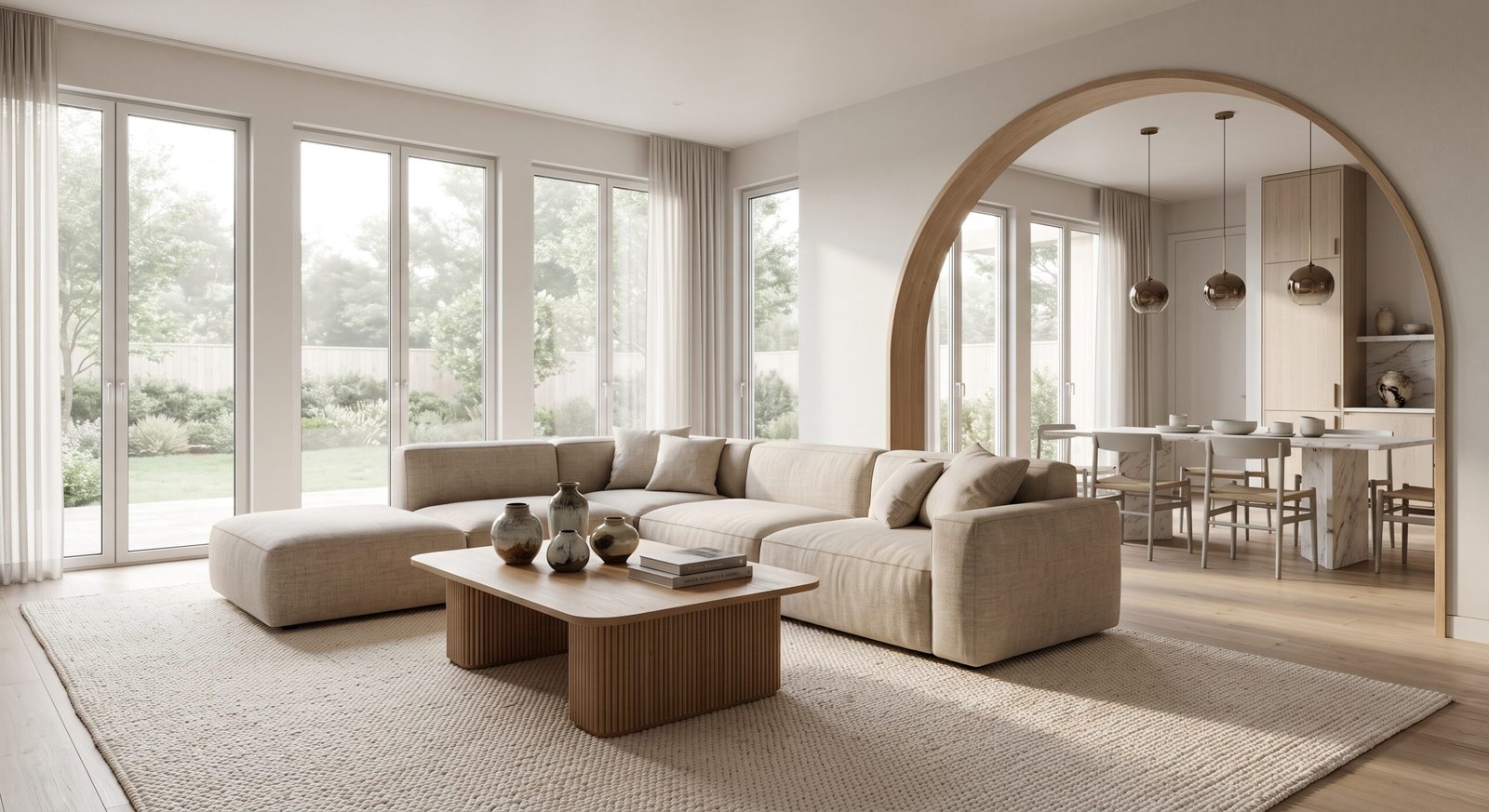
A thoughtfully designed home is not merely an assembly of attractive decor; it is an engineered balance between spatial ergonomics, visual weight, and daily functionality. Mastering modern interior design allows you to transform static square footage into responsive living environments that adapt to how you work, gather, and recharge.
Too often, residential design projects fail because they prioritize superficial decorative trends over foundational spatial mechanics. High-level interior design relies on time-tested principles: scaling furniture to spatial volume, creating layered lighting hierarchies, and balancing tactile textures. By establishing structural design logic before purchasing furniture or paint, you ensure enduring comfort and timeless visual appeal.
Key Takeaways
- Prioritize Proportion and Scale: Every piece of furniture must correspond to both the physical dimensions and vertical volume of a room to maintain natural circulation pathways.
- Implement Layered Illumination: Rely on three separate lighting tiers—ambient, task, and accent—to create depth and support practical functions across different times of day.
- Anchor Rooms with Visual Weight: Establish a singular, dominant focal point per space (such as a hearth, feature wall, or statement architectural console) to anchor sightlines.
- Engineer Tactile Tension: Combine contrasting textures—such as porous bouclé, honed stone, brushed metals, and open-grain timber—to cultivate depth without visual clutter.
The Core Framework: Fundamental Principles of Modern Spatial Planning
Interior design operates on mathematical harmony and environmental psychology. Before selecting materials or color swatches, optimize the spatial layout to prevent functional gridlock.
| Design Principle | Tactical Implementation | Common Homeowner Mistake | Direct Impact on Living Space |
| Traffic Clearance | Maintain 30 to 36 inches between primary walkways and major seating groups | Pushing all furniture against perimeter walls | Creates open, unguided paths while eliminating awkward bottlenecks |
| Focal Alignment | Center primary seating around an architectural feature rather than a television | Allowing multiple competing visual elements | Stabilizes the room’s visual weight upon entry |
| Vertical Staging | Hang curtain rods 3 to 6 inches above window moldings up toward the ceiling | Installing curtains right at the window casing | Artificially expands perceived wall height and maximizes light |
| Rug Proportioning | Ensure front legs of all major seating sit securely on the area rug | Floating small “postage stamp” rugs | Visually unifies independent furniture into a coherent zone |
Mastering the Three Layers of Lighting Architecture
Lighting defines how materials, scale, and color behave within an environment. High-performing interior design rejects the harsh single-overhead-fixture approach in favor of three distinct lighting planes:
1. Ambient Lighting (The Foundational Glow)
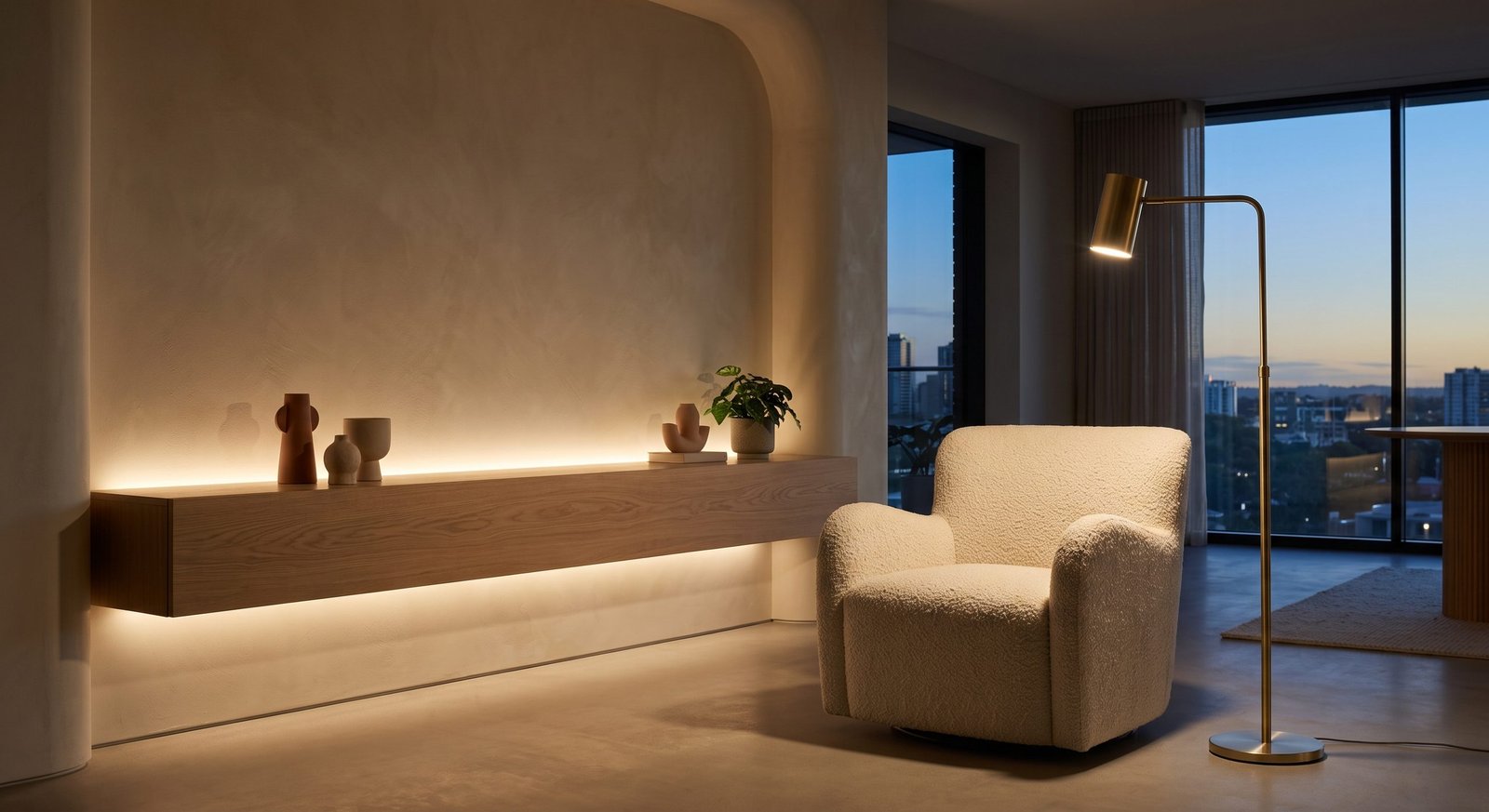
Ambient light sets the baseline illumination level for safe movement and general visibility. Use flush-mount fixtures, indirect architectural LED cove strips, or recessed fixtures paired with dimmer modules to regulate overall intensity according to daylight availability.
2. Task Lighting (Focused Utility)
Task lighting delivers high-lumen, glare-free illumination directly to functional work zones. In living spaces and reading nooks, implement angled floor lamps or directional sconces. In home offices and kitchens, under-cabinet task channels and articulated arm lamps provide concentrated visibility without casting shadows over workspaces.
3. Accent Lighting (Visual Drama and Dimension)
Accent fixtures add emotional depth by highlighting architectural textures, artwork, and sculptural objects. Aim for accent sources that provide roughly three times the illuminance of surrounding ambient light, creating captivating contrast and guiding the viewer’s eye through the room.
Materiality: The Art of Layering Organic and Industrial Textures
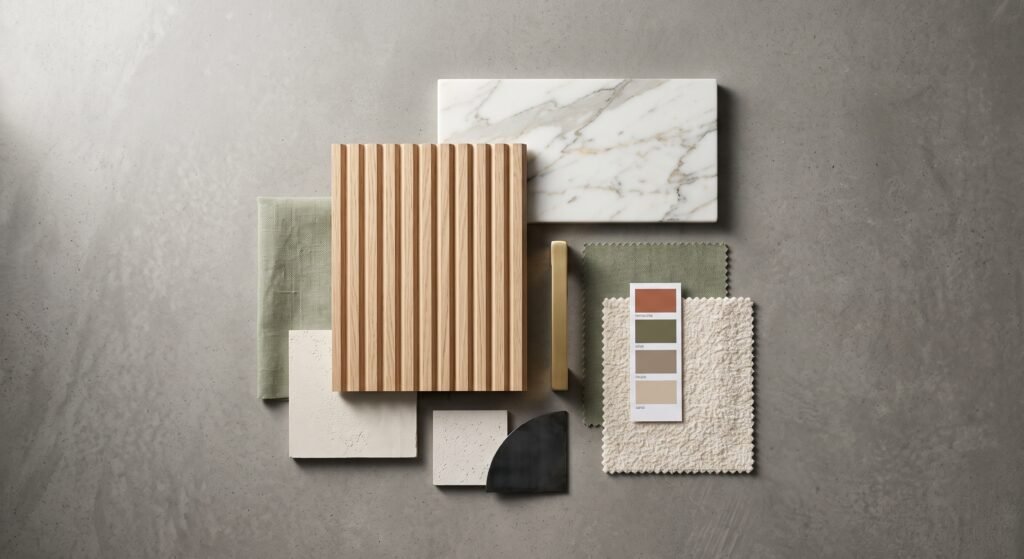
A monochromatic room does not have to feel sterile, just as a colorful room does not have to look chaotic. The secret to refined interior design lies in intentional material tension—juxtaposing raw, matte, and reflective finishes:
- Warm Organics: Integrate open-pore walnut, white oak, tumbled stone, and unglazed terracotta to ground the space in natural warmth.
- Tactile Textiles: Layer natural linens, heavy wool weaves, and raw silk to soften hard architectural planes and absorb acoustic reflections.
- Industrial Accents: Introduce blackened iron, unlacquered brass, or tinted smoked glass in small, deliberate doses to lend structural sharpness and visual edge.

Curating Enduring Environments
Exceptional interior design is not about rigid adherence to fleeting showroom catalogs; it is an iterative practice that honors architecture, natural light, and human movement. When you plan rooms around scale, implement balanced lighting tiers, and balance tactile textures, you create an effortless living experience. Your home ceases to be a static display and becomes a serene, functional environment built to support your daily life.
Frequently Asked Questions About Interior Design
What is the most crucial first step in any interior design project?
The foundation of any design project is defining the functional requirements and traffic patterns of the space before purchasing any furnishings. Measuring wall lengths, ceiling height, and window clearances prevents costly purchasing errors and ensures comfortable circulation.
How do I choose the correct size rug for a living room?
As a general design standard, choose a rug large enough so that at least the front two legs of all primary seating pieces—sofas and accent chairs—rest firmly on top of it. Floating a rug solely under the coffee table makes the entire room appear smaller and disjointed.
How can I make a small room feel significantly larger without knocking down walls?
Maximize perceived volume by utilizing continuous flooring throughout adjoining spaces, mounting curtain rods near the ceiling, incorporating low-profile furniture with visible legs, and using large mirrors opposite natural light sources to reflect depth across the room.
1 thought on “Interior Design : Functional Aesthetics for Living”