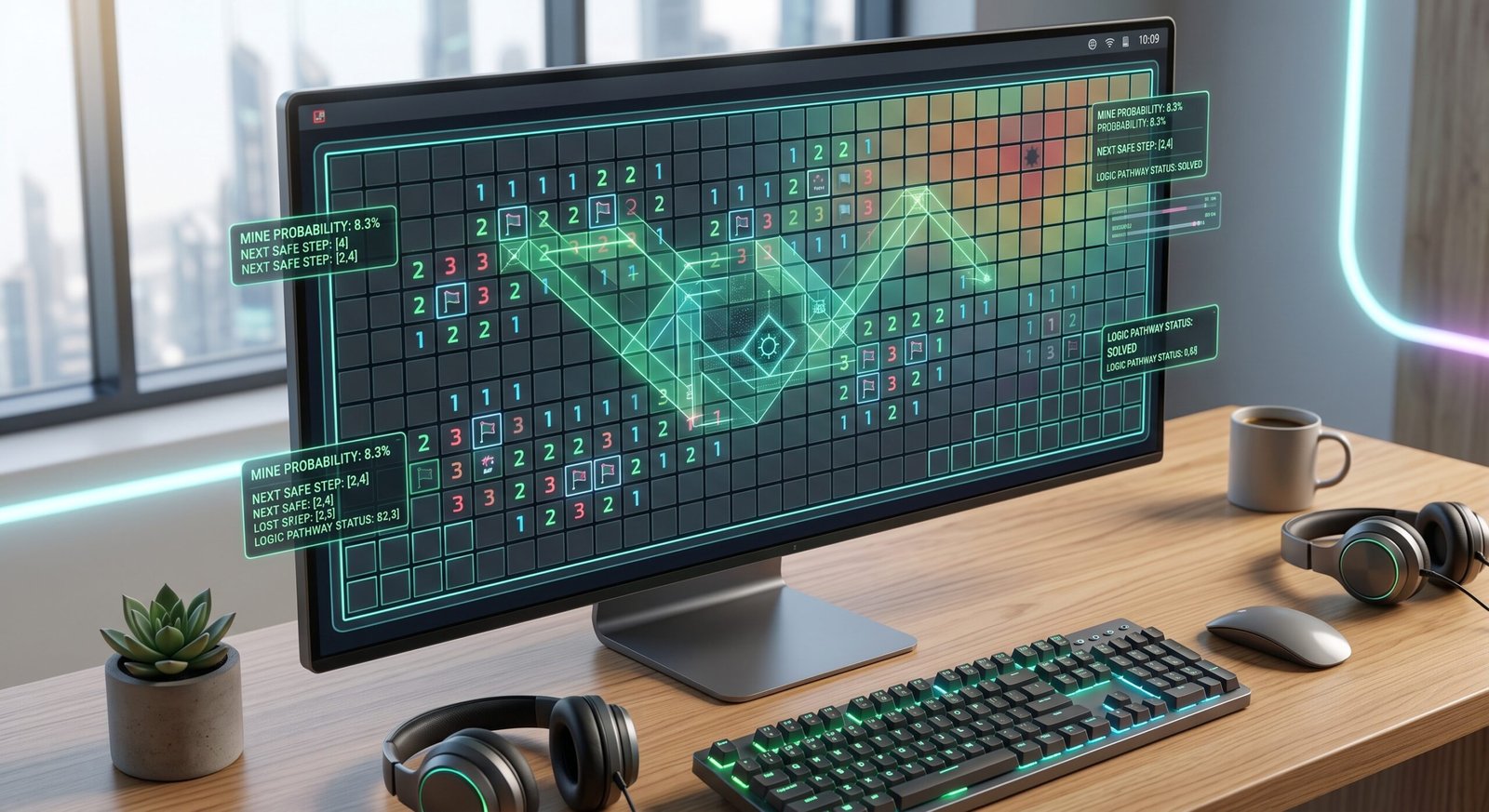
Minesweeper is often mistaken for a game of pure chance, but mastering it relies almost entirely on deductive logic and pattern recognition. Using this comprehensive Minesweeper winning guide, you can move past random clicking and develop the analytical instincts required to clear beginner, intermediate, and expert difficulty grids systematically.
Whether you are aiming to set personal speedrun records or simply solve complex board states without detonating a hidden mine, understanding the mathematical relationships between numbered tiles is your key to consistent victory.
Key Takeaways
- Every Number is a Boundary Rule: A numbered tile tells you the exact count of hidden mines touching its 8 adjacent grid squares.
- Open with Corners or Center Clusters: Modern implementations guarantee safety on your first click, creating initial empty space clusters to build momentum.
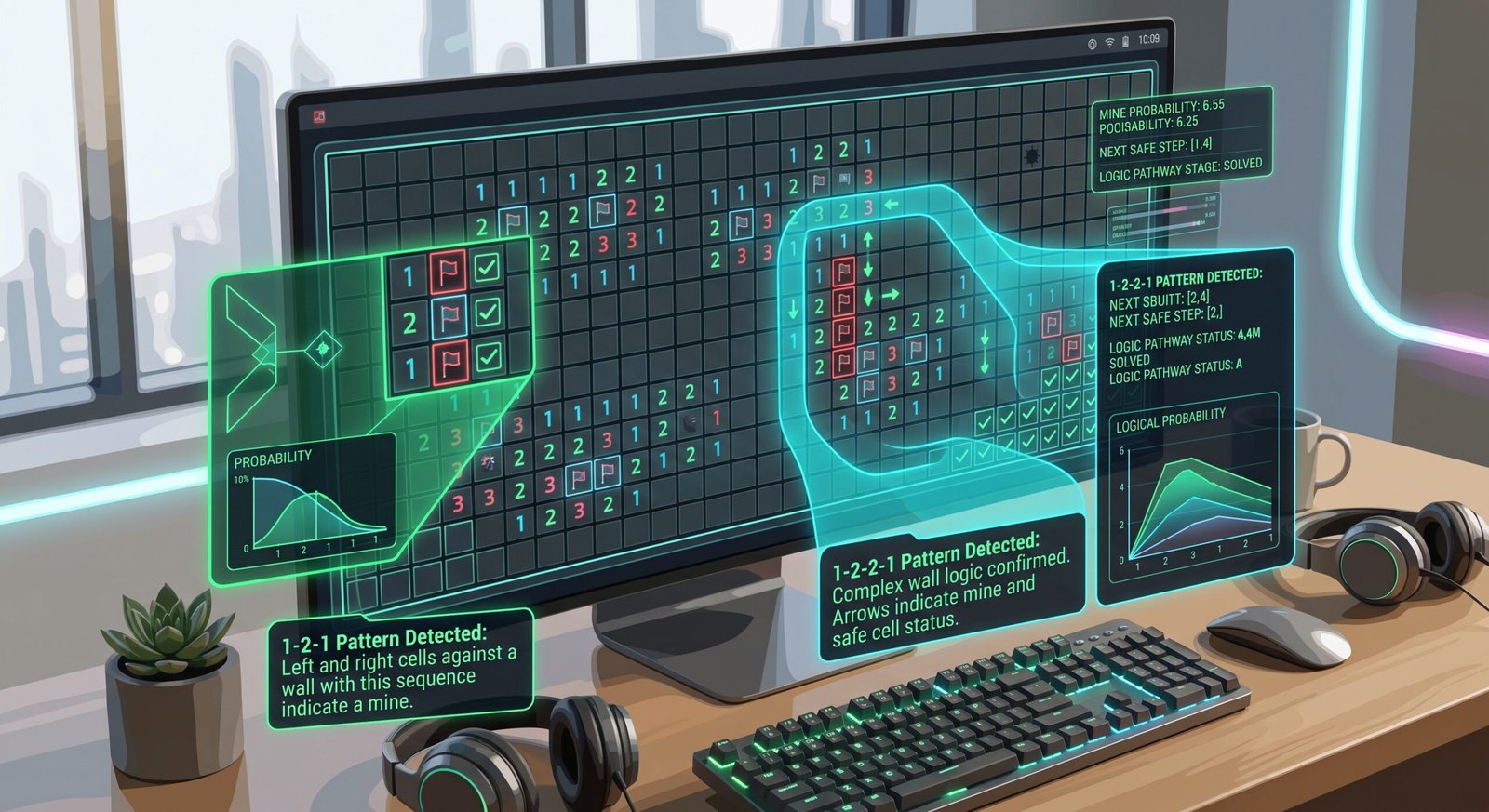
- Memorize Core Deductive Patterns: Recurring formations—such as the classic 1-2-1 and 1-2-2-1 patterns—reveal safe squares instantly without guesswork.
- Flag Only When Structurally Necessary: Placing flags helps track high-density minefields, but over-flagging can slow down intermediate and expert play.
1. The Core Mechanics: Reading Numbers and Safe Openings
Every cell in a standard grid is bordered by up to eight surrounding squares.
- Understanding the Numbers: A “1” indicates that exactly one adjacent square contains a mine; a “3” means three bordering cells hold mines.
- Blank Cascades (Opening Clusters): Clicking an unmined cell with zero surrounding threats triggers an automatic cascade opening, revealing broad operational territory.
- Corner vs. Center First-Clicks: While clicking corners isolates perimeter threats early, central openings tend to reveal larger cascaded openings that give you more simultaneous angles of analysis.
2. Fundamental Logic Rules and the 1-2-1 Pattern
Solving grid states efficiently requires recognizing how adjacent numbers overlap and constrain the available mine placements.
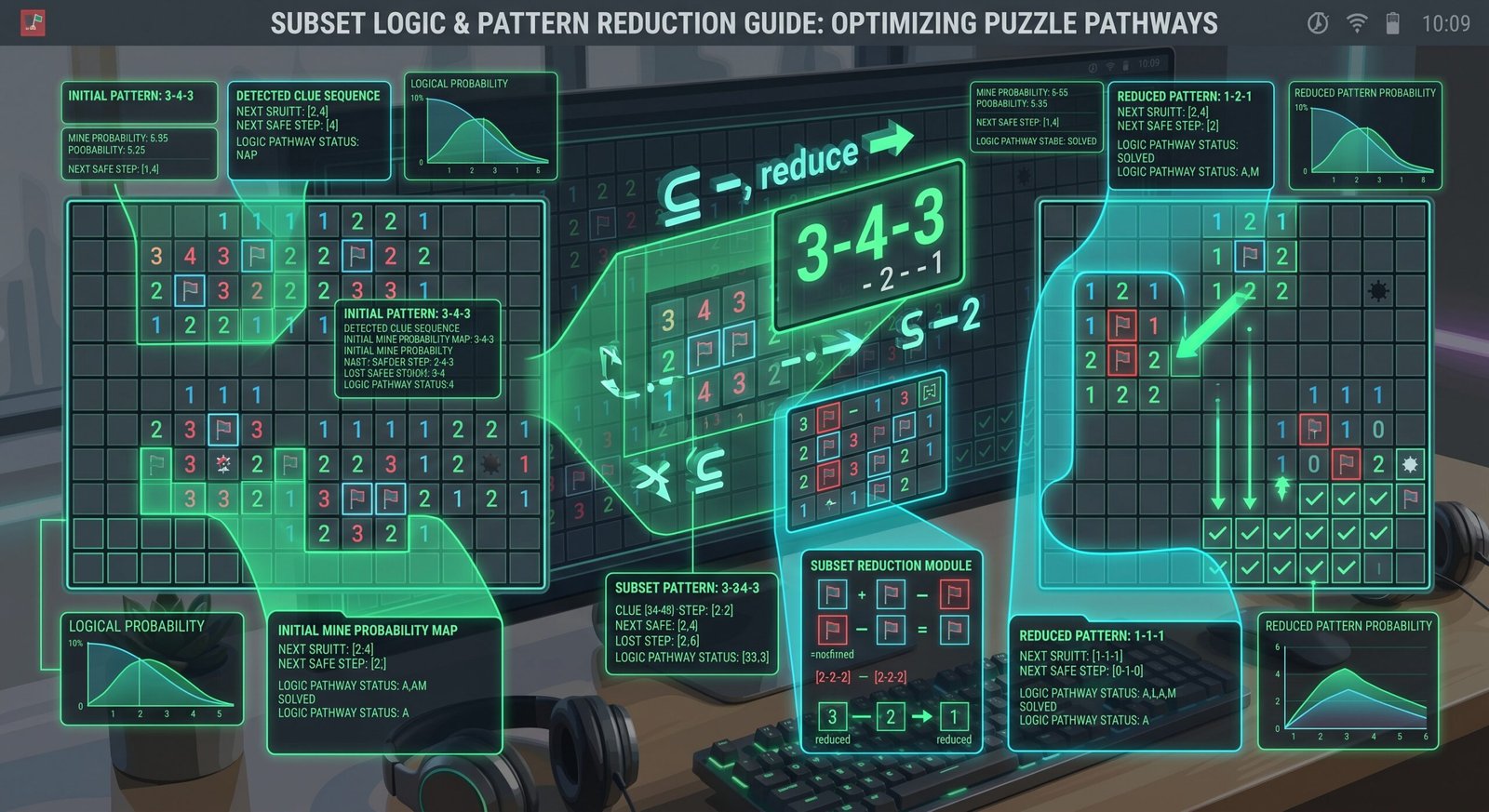
3. Advanced Techniques: The “Chording” Method and Endgame Probability
Once basic deductive reasoning is second nature, advanced techniques help you shave seconds off your completion times and handle ambiguous endgames.
Efficient Chording (Double-Clicking)
When a numbered tile touches the correct number of flagged mines, executing a double-click (or simultaneous left-and-right mouse click) instantly opens all remaining unflagged adjacent tiles. This eliminates repetitive clicks and speeds up board clearance.
Navigating 50/50 Guess Scenarios
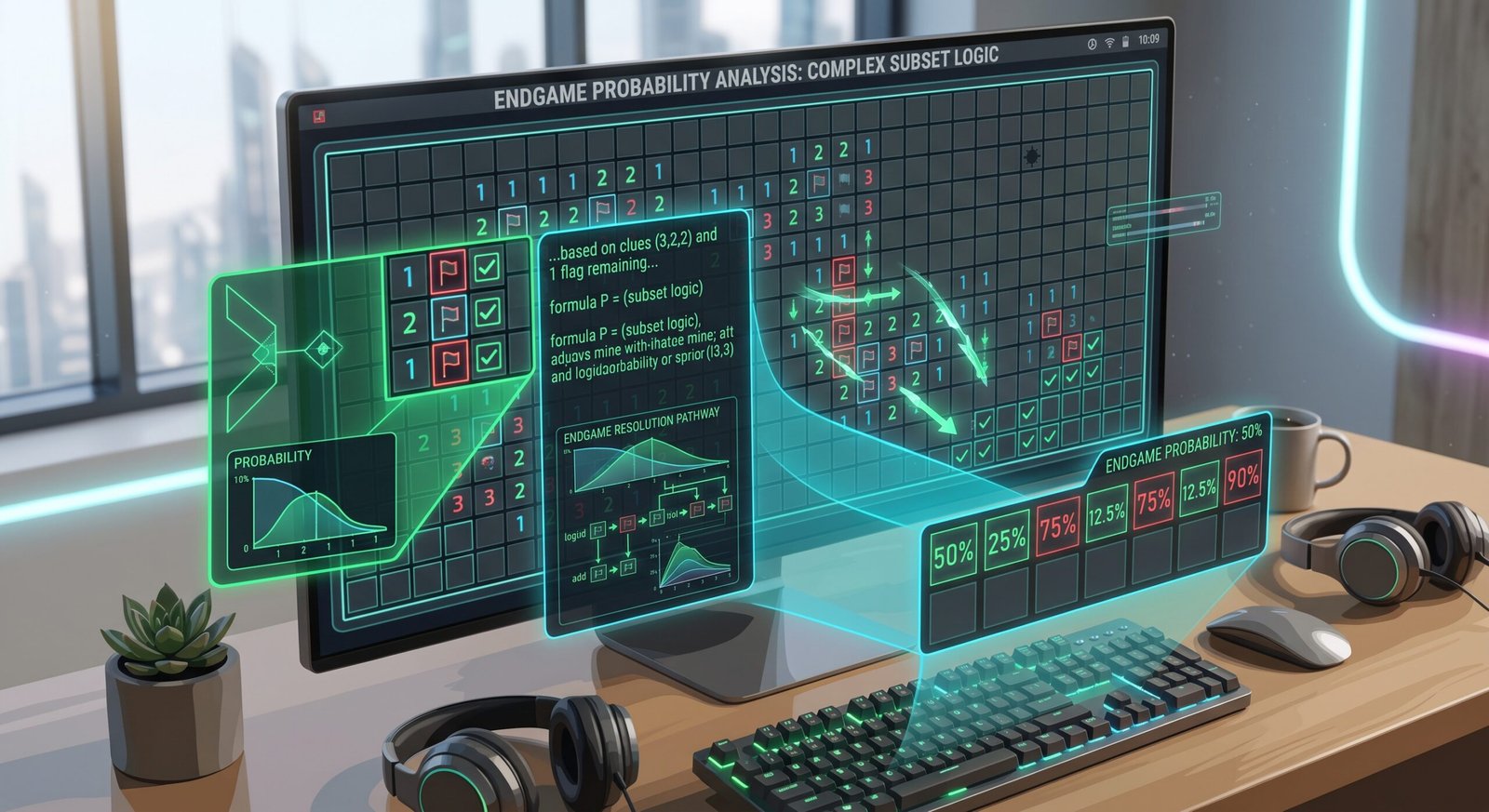
Occasionally, a localized corner configuration produces a true mathematical 50/50 scenario where logic alone cannot determine the mine.
- Delay the Guess: Solve all other available sectors first. Clearing the rest of the board updates your remaining mine counter.
- Assess Mine Density: Count total remaining unflagged mines versus unopened tiles to evaluate overall grid probability before committing to a click.
4. Step-by-Step Checklist to Clear Any Board
- Trigger Your Safe Opener: Click near the center to generate an opening cascade.
- Sweep Obvious Corners: Identify satisfied single tiles touching single unrevealed squares and place flags.
- Chord Satisfied Tiles: Clear adjacent safe perimeter squares in rapid succession.
- Apply Wall Patterns: Scan flat boundary lines for standard 1-2-1 and 1-2-2-1 configurations.
- Count Remaining Mines: Use the remaining mine tally to resolve isolated end-game clusters logically.
Frequently Asked Questions
Is every Minesweeper board 100% solvable without guessing?
In standard classic implementations, board generation is random, meaning a small percentage of endgames present unavoidable 50/50 probability scenarios. Modern “no-guess” variants, however, use algorithms that ensure every board is purely solvable through logic.
What does the number 8 mean in Minesweeper?
A tile displaying an “8” means every single square directly adjacent to it (all eight directions) contains a mine. This is the rarest tile in the game.
Why shouldn’t I flag every single mine?
Flagging every single mine costs time during speed runs. Expert solvers frequently leave obvious mines unflagged and simply click safe adjacent tiles instead, using flags primarily as visual markers for complex overlapping logic.
Mastering this Minesweeper winning guide transforms a game of apparent luck into a rewarding exercise in analytical precision. Focus on memorizing foundational patterns, use chording to accelerate your workflow, and approach each board with calculated deductive steps to consistently achieve flawless board clears.
1 thought on “Minesweeper Winning Guide: Step-by-Step Tutorial”