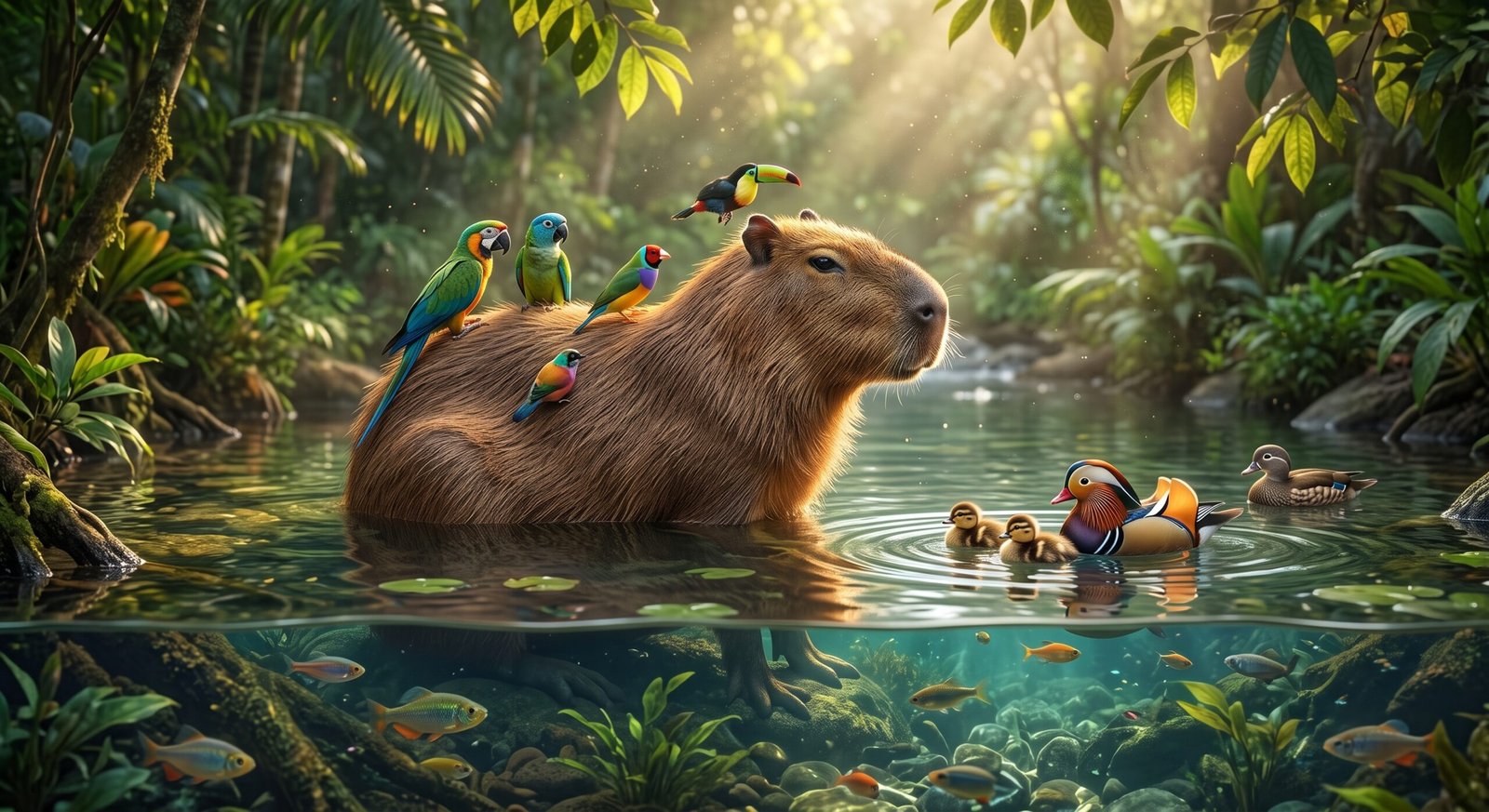
From viral TikTok soundbites to wholesome reaction memes, capybaras have officially taken over global pop culture. Known scientifically as Hydrochoerus hydrochaeris, these gentle giants look like giant guinea pigs and act like zen masters of the animal kingdom. Unpacking these viral capybara facts reveals that their internet celebrity is backed by fascinating biology, unique social behavior, and a famously unbothered temperament.
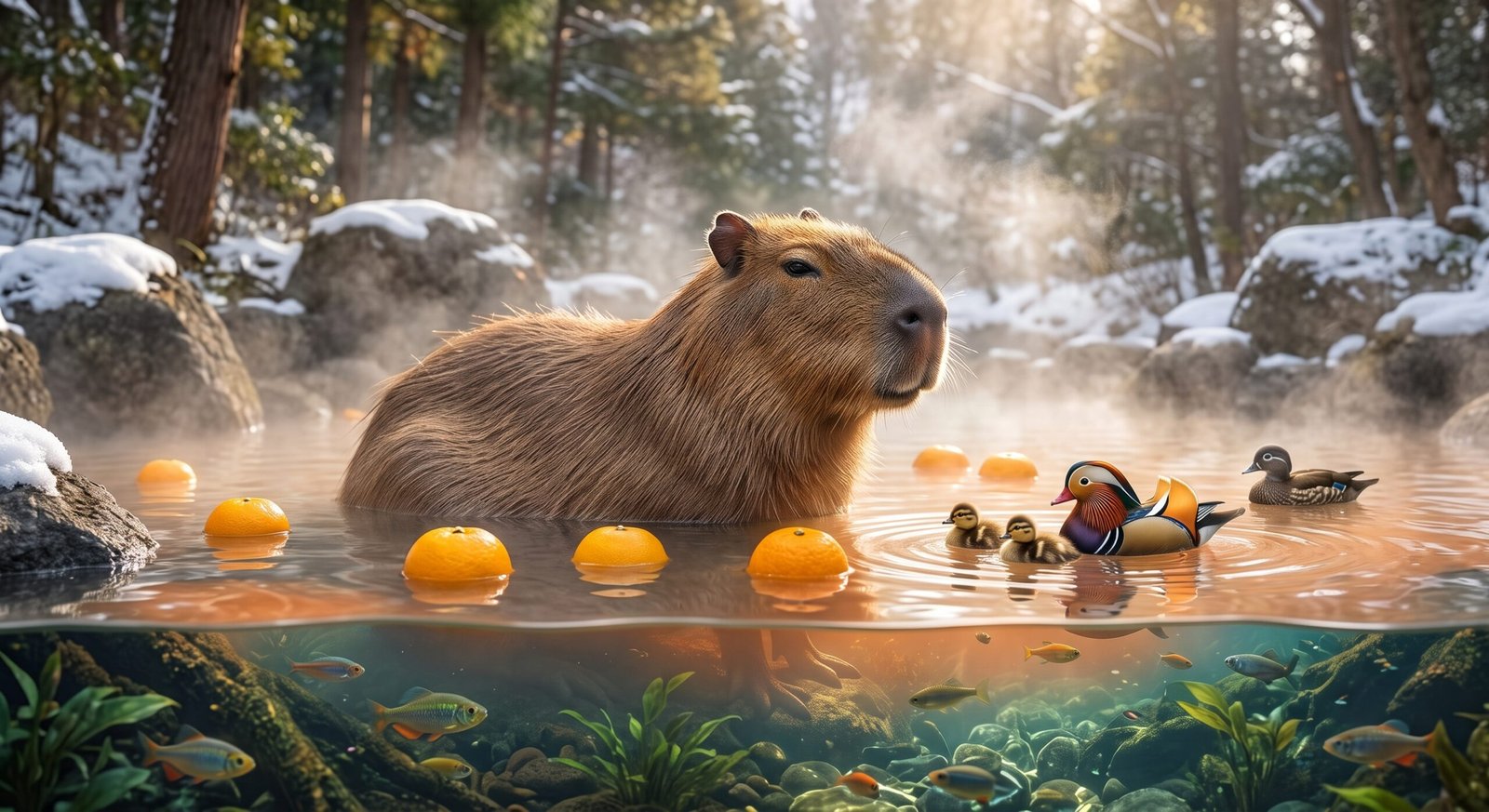
Whether lounging in Japanese yuzu citrus hot springs or serving as a living perch for birds and monkeys, capybaras have earned a reputation as the world’s friendliest creatures.
Key Takeaways
- World’s Largest Rodent: Adult capybaras weigh between 35 and 70 kg (77 to 150 lbs), standing around 60 cm tall.
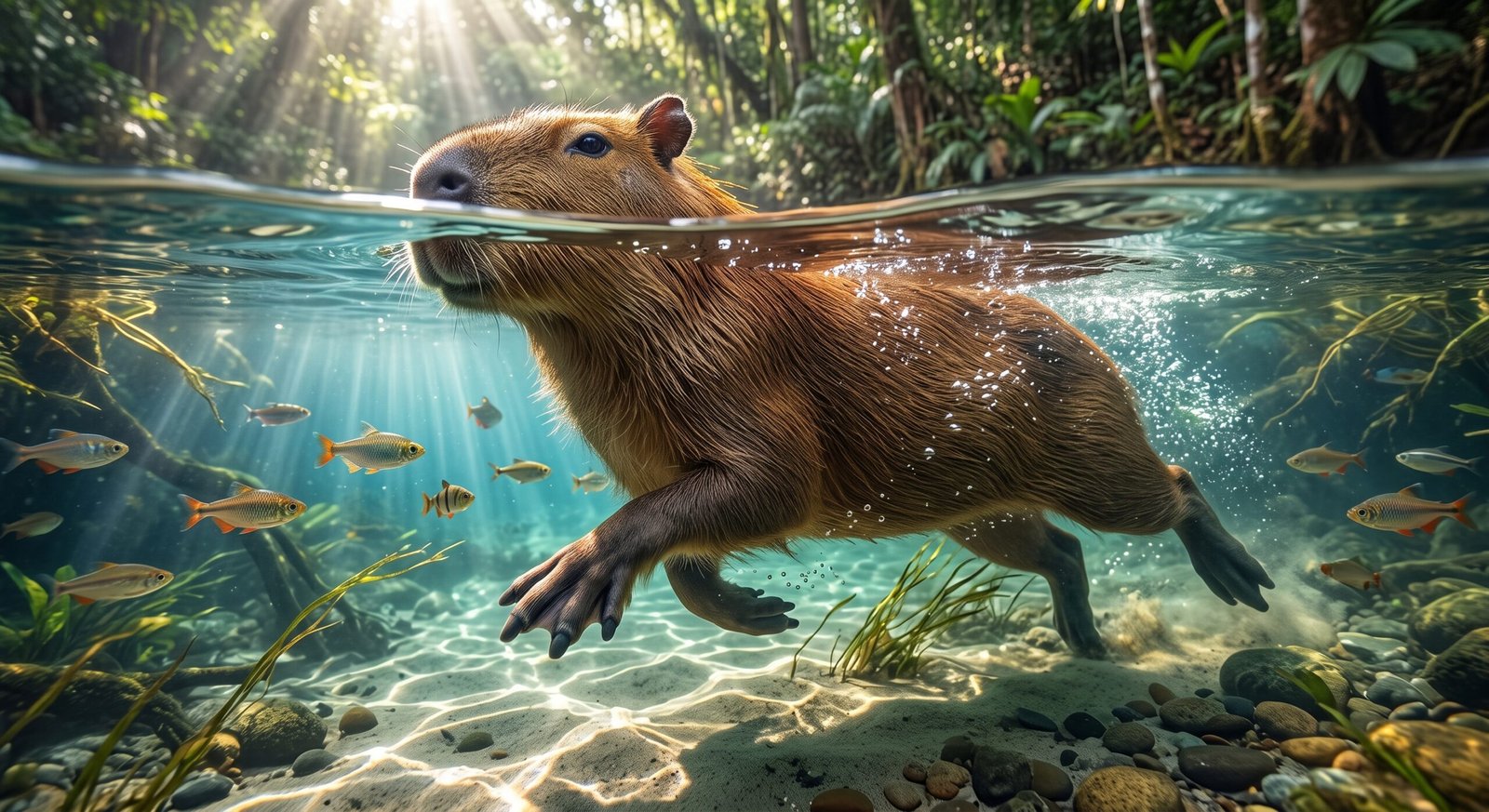
- Master Swimmers: Equipped with partially webbed feet, they can remain submerged underwater for up to five minutes to escape predators or stay cool.
- Nature’s Living Ottoman: Their relaxed temperament and mutualistic relationships mean other species—from ducks to monkeys—regularly sit on their backs.
- Sophisticated Communicators: Capybaras use a complex vocal repertoire of whistles, purrs, barks, squeaks, and teeth-chattering to maintain group harmony.
1. The Anatomy of a Giant: Size, Teeth, and Semi-Aquatic Living
Behind every meme is an evolutionary marvel designed for life in South American wetlands.
- Massive Proportions: Native to the marshes, rivers, and savannas of South America (notably Brazil’s Pantanal and Venezuela’s Llanos), capybaras are the undisputed heavyweight champions of the rodent family.
- Ever-Growing Incisors: Like beavers and guinea pigs, their front teeth never stop growing. They graze continuously on grasses, water hyacinths, and tree bark to wear them down naturally.
- Built-in Snorkel Architecture: A capybara’s eyes, nostrils, and ears sit high on top of its head, allowing it to swim and nap while keeping its sensory organs safely above the waterline.
2. Why Are Capybaras So Friendly? Symbiosis and Social Tolerance
The primary reason capybaras went viral is their uncanny ability to get along with virtually every living creature.
| Companion Species | Observed Interaction | Biological Benefit |
| Birds (Caracaras, Cattle Egrets) | Perching on capybara backs | Mutualism: birds eat ticks and flies; capybaras receive free grooming |
| Monkeys & Rabbits | Sharing shade and resting nearby | Safety in numbers: alarm calls signal incoming land predators |
| Caimans (Crocodilians) | Basking in close proximity | High adult body mass deters attacks; mutual calm avoids conflict |
| Humans | Gentle interaction in wildlife sanctuaries | Naturally docile temperament makes them low-stress herbivores |
3. The Internet’s Calmest Celebrity: Memes, Hot Springs, and “Ok I Pull Up”
The capybara’s rise to internet royalty was not accidental; their unbothered expressions perfectly match modern meme aesthetics.
The Yuzu Bath Phenomenon
In Japanese zoos like Izu Shaboten Zoo, keepers introduced winter hot spring baths infused with floating yuzu citrus fruits. The sight of capybaras closing their eyes in steamy water became an international sensation of self-care and relaxation.
The Relatable “Zen” Energy
Unlike high-energy pets that demand active engagement, capybaras appear perpetually relaxed. Their stoic, slightly stoic facial expression has made them the ultimate avatar for stress-free living and workplace burnout humor.
4. Vocal Range and Quirky Dietary Adaptations
Beyond their calm exterior, capybaras exhibit quirky biological habits that surprise most fans.
- Vocal “Singing” Groups: Living in tight-knit herds of 10 to 30 individuals, capybaras communicate using melodic chirps, purrs when comfortable, and sharp barks when warning of danger.
- Coprophagy for Nutrition: Because digesting tough, fibrous grasses is difficult, capybaras eat their own nutrient-rich feces in the morning. This allows beneficial gut bacteria to break down cellulose and extract essential vitamins on a second pass.

Frequently Asked Questions
Do capybaras make good house pets?
No. While they are docile, capybaras require large swimming pools, expansive grazing land, strict specialized diets, company from other capybaras, and legal permits, making them ill-suited for domestic home living.
Can capybaras run fast despite their size?
Yes. Despite their stocky appearance, a capybara can run at speeds up to 35 km/h (22 mph) over short distances to escape apex predators like jaguars and pumas.
Why do other animals sit on capybaras?
This behavior is driven by mutualism. Capybaras tolerate birds and small mammals on their backs because those animals eat parasitic insects, while the capybara’s slow movements provide a steady, safe vantage point.
These viral capybara facts illustrate why the world remains captivated by the largest rodent on Earth. Through their cooperative social dynamics, peaceful demeanor, and remarkable wetland adaptations, capybaras prove that calmness and community are some of nature’s greatest evolutionary assets.
1 thought on “Viral Capybara Facts: Why We Love Earth’s Chillest Pet”