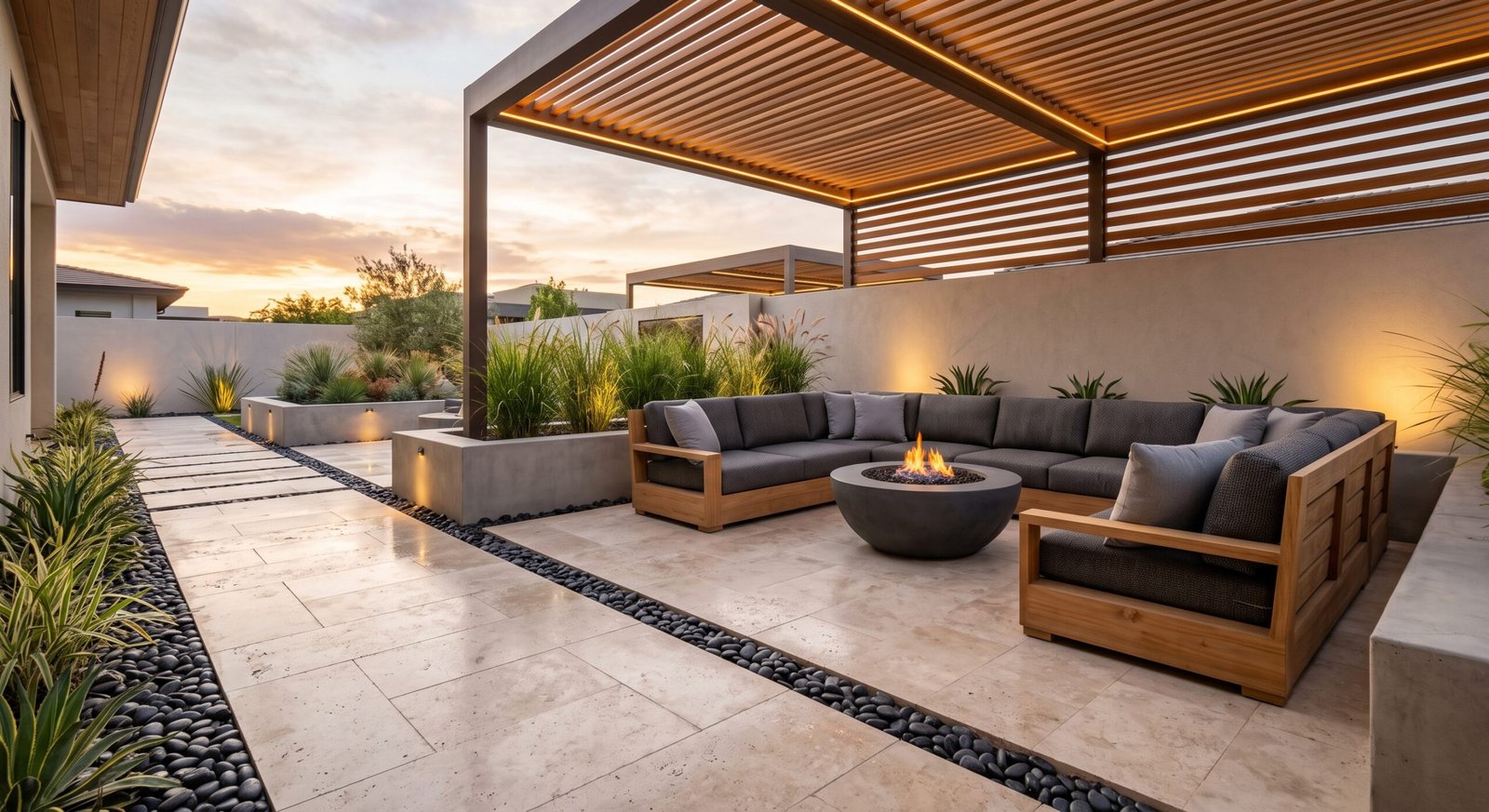
An outdoor living space is an extension of your home’s interior, demanding an equal commitment to routine preservation and material stewardship. Without structured outdoor & patio care, seasonal exposure to ultraviolet radiation, driving rain, freeze-thaw cycles, and organic debris rapidly degrades hardscape surfaces and high-end exterior furniture.
Protecting these installations goes far beyond a casual hose rinse in late spring. Sustainable maintenance requires understanding material porosity, joint stability, and protective chemical sealants. By executing a proactive exterior maintenance plan, you protect your hardscape investment, prevent permanent surface staining, and ensure your outdoor retreat remains pristine year-round.
Key Takeaways
- Match Chemistry to Hardscape Substrates: Acidic cleaning agents strip polished limestone and etch concrete; rely on pH-neutral surfactants or specialized enzymatic cleaners for masonry.
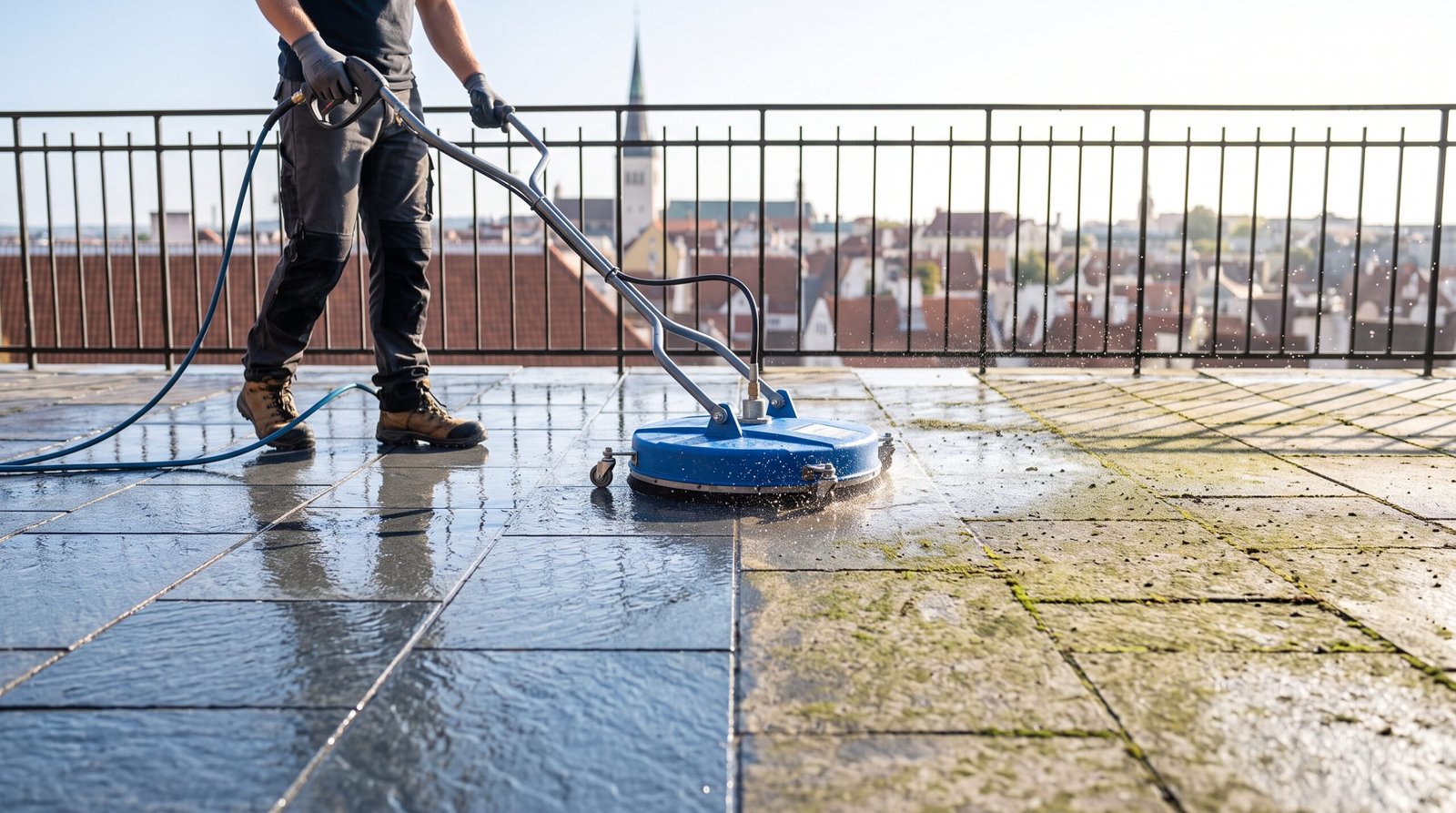
- Preserve Polymeric Sand Joints: High-pressure power washing can blast away stabilizing paver sand; calibrate pressure below 1,500 PSI and utilize wide fan tips.
- Shield Natural Wood Fiber: Teak, cedar, and ipe require breathable penetrating oils rather than film-forming varnishes to prevent moisture trapping and surface checking.
- Neutralize Fabric Moisture Traps: Solution-dyed acrylic outdoor textiles require regular dust removal to prevent airborne spores from germinating into embedded mildew.
Hardscape Material Diagnostic: Maintenance Protocols by Surface
Every patio surface features distinct absorption rates and mineral sensitivities that dictate appropriate care methods.
| Substrate | Vulnerability | Ideal Cleaning Approach | Sealing Frequency |
| Poured Concrete & Pavers | Oil staining, freeze-thaw spalling | Alkaline degreasers, medium-pressure rotary surface cleaner | Every 2–3 years (silane/siloxane penetrating sealer) |
| Natural Limestone & Travertine | Acid erosion, efflorescence | pH-neutral stone cleaner, soft-bristle nylon deck brush | Every 1–2 years (breathable fluoropolymer impregnator) |
| Bluestone & Slate | Surface flaking (clefting), organic tannin stains | Oxygenated bleach solution, low-pressure rinse | Every 2 years (matte penetrating finish) |
| Porcelain Exterior Tile | Grout line discoloration | Mild surfactant wash, stiff-bristle detail brushing | Tile: None; Cementitious Grout: Annually |
3 Pillars of Long-Term Outdoor & Patio Care
Sustaining an outdoor living environment requires targeting the structural components that bear the brunt of weather wear.
1. Hardscape Decontamination and Joint Maintenance
Weeds, moss, and lichen take root when the stabilizing sand between paving units erodes.
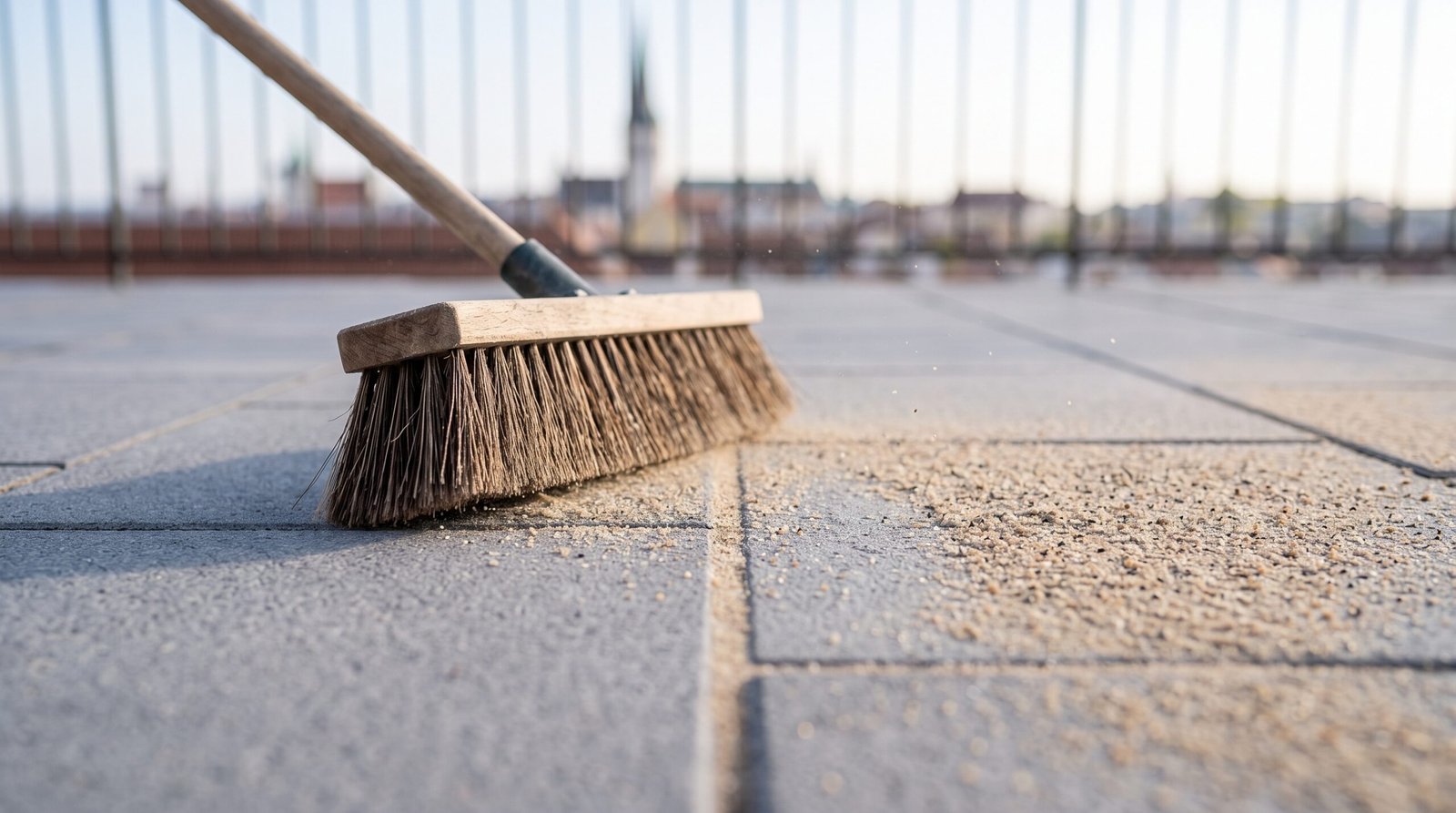
- Surface Cleaning: Sweep loose debris weekly to stop organic tannins from dead leaves leaching into porous stone. For seasonal deep cleans, apply an oxygen-activated bleach wash to lift mold spores without harming adjacent landscape plantings.
- Joint Stabilization: Inspect joints after cleaning. If polymeric sand has dropped more than 1/8 inch below the paver chamfer, sweep in dry polymeric jointing sand, tamp thoroughly, and mist to activate the binding polymers.
2. Exterior Wood Restoration and Oiling
Dense hardwoods like teak contain natural silica and oils that resist rot, but unprotected exposure turns them silvery-gray and leads to surface micro-cracks.
- Cleaning: Wash with a mild dish soap and water solution, scrubbing across the grain with an abrasive pad to dislodge ingrained soil. Avoid high-pressure washers on wood, as they raise the wood grain and cause severe splintering.
- Conditioning: Apply a marine-grade teak oil or penetrating matte sealer annually to replenish lost resins and protect against intense UV ray bleaching.
Protecting Upholstery, Metals, and Cooking Stations
Finishing elements require targeted defenses against oxidation and biological contamination:
- Powder-Coated Aluminum and Iron: Wash metal frames quarterly with automotive car wash soap to preserve the clear-coat seal. Apply a thin layer of paste wax to metal seams to prevent water intrusion and galvanic oxidation.
- Performance Fabric Preservation: Brush off dry debris from solution-dyed acrylic cushions before it settles into the weave. Spot-clean water spots using a mild enzyme detergent, and mist fabrics annually with a fluoropolymer water-repellent spray to restore water beading.
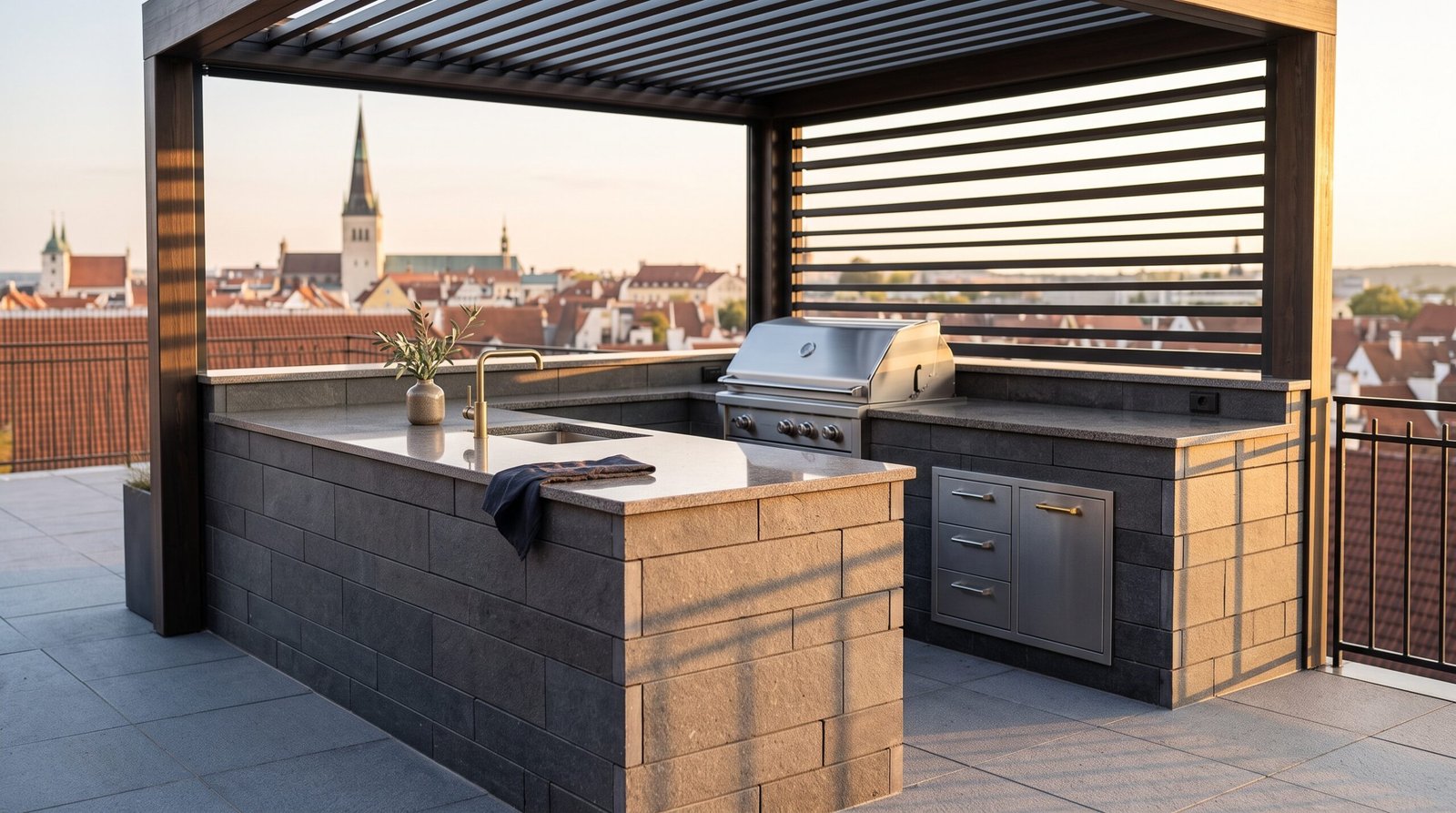
- Outdoor Kitchen Enclosures: Wipe stainless steel grills and prep surfaces along the grain using non-chlorinated stainless cleaners to guard against atmospheric pitting and salt mist corrosion.
Sustaining Your Exterior Living Investment
Effective outdoor & patio care is a preventative routine that shields exterior spaces from weathering before structural damage takes hold. By pairing gentle, pH-appropriate cleaners with stabilizing joint maintenance and protective breathable oils, you keep exterior surfaces robust across all seasons. A regular maintenance schedule ensures your patio remains an inviting, high-performance oasis for years to come.
Frequently Asked Questions About Outdoor & Patio Care
Can I safely use a pressure washer on all patio pavers?
No. Pressure washers running above 1,500 PSI can easily etch delicate natural stone like limestone, blast away protective surface sealers, and wash out joint-stabilizing polymeric sand. Use a wide 40-degree fan tip or a specialized rotary surface-scrubbing attachment held at a uniform distance to prevent gouging the stone.
How often should natural stone and concrete patios be resealed?
Most exterior hardscapes benefit from resealing every two to three years. Dense natural stones like bluestone require breathable penetrating sealers that allow trapped subterranean ground moisture to escape, whereas concrete pavers benefit from topical sealers that prevent oil penetration and enhance color depth.
What is the best way to remove stubborn rust stains from a patio?
Avoid muriatic or hydrochloric acid, which dissolves the cementitious matrix of pavers and etches polished stone. Instead, use an oxalic acid-based rust remover or a buffered citrus-based chelating agent. Apply the solution directly to the rust spot, agitate gently with a nylon brush, let it dwell for 10 minutes, and rinse thoroughly with clean water.
1 thought on “Outdoor & Patio Care: Hardscape Maintenance Protocols”